
Last updated October 16, 2026
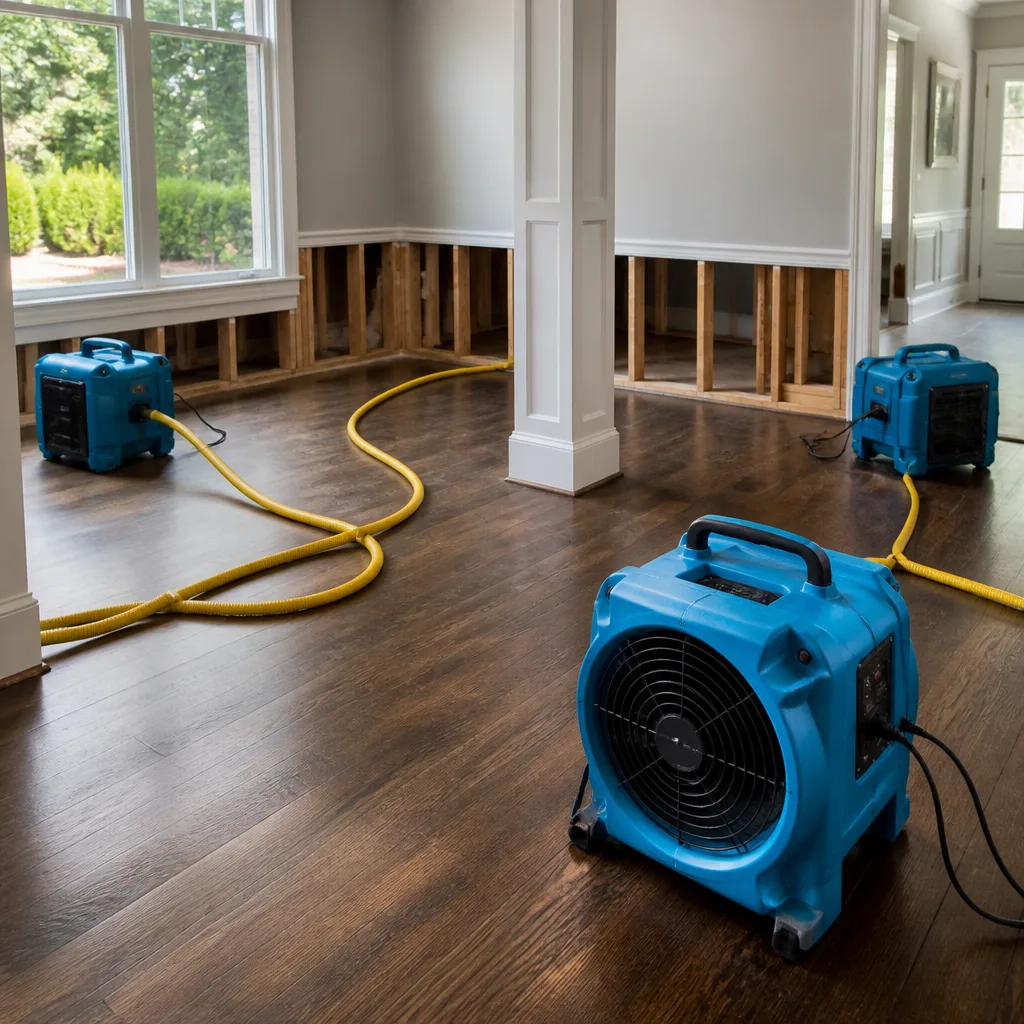 Water damage drying
 Fire & smoke cleanup
 Mold remediation
 Storm response
 Sewage cleanup
 Reconstruction
Free visual inspection and a written scope of work before any mitigation begins - photos, moisture readings, and drying logs go in your claim file
The scope we write is the scope we bill. Anything new gets shown to you, in writing, before we touch it.
Get your free estimateSeasonal Damage Restoration Care for Hempstead: Year-Round Homeowner’s Guide
Every year, Hempstead homeowners spend thousands of dollars on water damage that could have been caught two months earlier with a ten-minute routine. The two costliest restoration calls we field in Nassau County happen within 60 days of each other: frozen pipe bursts in February and sump pump failures during the March snowmelt. Almost all of them trace back to actions not taken the previous November. This guide walks you through Hempstead’s four distinct risk seasons, what changes in your home during each one, and the specific habits that keep small seasonal shifts from becoming expensive restoration jobs. For a deeper look at protecting your property year-round, see our Water Damage Restoration Maintenance Checklist for Hempstead Homeowners.
Quick Answer
Seasonal damage prevention in Hempstead means matching your maintenance routine to four distinct risk windows: freeze-and-thaw pipe stress from December through March, spring hydrostatic pressure against basement walls, summer humidity above 75% that feeds hidden mold after any earlier water exposure, and hurricane-season wind-driven rain from June through November. The most important actions happen in November (winterizing plumbing), March (checking sump systems before snowmelt), and early June (documenting your home’s condition before storm season). For step-by-step guidance on each season, explore The Complete Guide to Damage Restoration in Hempstead.
Restoration work we handle
Table of Contents
- Hempstead’s Quarter-by-Quarter Risk Calendar
- Winter: Frozen Pipes, Attic Condensation, and Ice Dams
- Spring: Snowmelt, Sump Pumps, and Hydrostatic Pressure
- Summer: Humidity, Hidden Mold, and the Re-Test Gap
- Fall: Hurricane Season Wrap-Up and the Readiness Reset
- Restoration Readiness: What to Document Before June 1
- How the 365-Day Done Right Promise Covers Seasonal Re-Checks
- Common Mistakes to Avoid
- When to Call a Professional
- Frequently Asked Questions
Hempstead’s Quarter-by-Quarter Risk Calendar
Hempstead sits at a meteorological crossroads that most national home-maintenance advice ignores. We get nor’easter snow loads, tidal surge from the South Shore, a Long Island summer humidity pattern that regularly pushes past 75%, and enough hard-freeze nights to test every pipe in homes built before insulation standards caught up. None of these risks stays active year-round. Each one has a season, and the homeowner actions that prevent them have to shift on the same schedule.
The single biggest mistake we see, after a decade and a half of responding to calls across Hempstead, is treating the home as a static system. It isn’t. The basement floor that stays dry in August is the same floor that faces measurable hydrostatic pressure in March when groundwater levels peak. The attic that ventilates fine in January is the same attic that condenses in December when warm indoor air meets a frozen roof deck. The calendar below is built from what we’ve actually observed on restoration jobs in this ZIP code, not from generic seasonal advice.
December through February: Freeze-thaw cycles stress supply lines in exterior walls, garage-wall plumbing, and hose bibs. Attic condensation forms on cold roof sheathing. Ice dams build at the eaves after repeated snowfall and partial melts. Sump pumps run more often than people realize, especially with ground that hasn’t fully frozen and an active water table.
March through May: Snowmelt and early spring rains push soil saturation to its annual peak. Basement floors and foundation walls face maximum hydrostatic pressure exactly when sump pumps are asked to work hardest. Discharge lines that froze over winter may be blocked or cracked, sending water right back to the foundation. This is when sump failure calls spike, often two or three per block in the older Hempstead neighborhoods.
June through August: Heat and humidity above 75% create the perfect environment for any mold spores that survived a spring drying. Homes that were dried after a flood but never re-tested before August are those summer humidity’s second wave hits hardest. Window air conditioners and whole-house systems struggle against latent moisture, and condensation on cold ductwork becomes a hidden secondary source.
September through November: Hurricane season peaks, wind-driven rain exposes roof and flashing weaknesses, and falling temperatures begin the transition back to freeze risk. This is the window for the November winterization sequence, and it’s also the time to schedule any pending restoration re-check before pipes become inaccessible behind frozen ground.
Winter: Frozen Pipes, Attic Condensation, and Ice Dams
The frozen pipe that bursts in February doesn’t fail on the day it bursts. It fails after weeks of accumulating stress in a supply line that wasn’t prepared in November. In Hempstead, homes built before 1980 are especially vulnerable because plumbing routes through exterior walls and garages weren’t designed for the freeze cycles we now see. Modern insulation standards simply didn’t exist in the construction era that produced much of Hempstead’s existing housing stock.
The November Sequence That Prevents February Bursts
- Shut off the interior valve for every exterior hose bib. Disconnect hoses. Drain the bib by opening the exterior valve for 30 seconds after the interior shutoff. Leave the exterior valve slightly open so residual water has room to expand if it freezes.
- Locate the main water shutoff valve and confirm it turns. This is a two-minute habit with a significant payoff. When a pipe breaks at 3 a.m., a working shutoff is the difference between a mop bucket response and a full water damage restoration call in Hempstead.
- Insulate any plumbing in the garage, crawl space, or exterior wall cavity with pipe wrap rated for the location. For garages, use heat tape with a built-in thermostat on any line that runs along an exterior wall where temperatures consistently drop below freezing.
- Set the thermostat no lower than 55°F on nights when the outside temperature drops below 20°F, even if the house is empty. The incremental heating cost is minor compared to a burst line behind a kitchen cabinet.
- Open the cabinet doors under kitchen and bathroom sinks on hard-freeze nights so indoor air circulates around drain and supply lines.
Attic condensation is a separate winter issue that many Hempstead homeowners mistake for a roof leak. Water stains on bedroom ceilings in January, especially after a cold night followed by a warm day, are usually condensation from warm indoor air hitting a cold roof deck. The fix is ventilation and air-sealing work you can schedule anytime before the first hard freeze: seal around recessed light housings, confirm soffit vents aren’t blocked by insulation, and verify the attic has a working intake-to-exhaust balance.
Spring: Snowmelt, Sump Pumps, and Hydrostatic Pressure
In Hempstead, March and April bring the highest groundwater levels of the year. Every inch of snowmelt from a nor’easter winter and every early spring rain finds its way into the soil around your foundation, and that water pushes against basement walls with measurable force called hydrostatic pressure. Concrete is porous. Over years, water finds its way through hairline cracks, cove joints where the floor meets the wall, and gaps around utility penetrations.
Sump pumps are the primary defense in this season, and they fail more often from neglect than age. A discharge pipe that froze during a February cold snap can stay blocked until the March thaw, sending the pump’s entire output right back to the foundation. A float switch jammed by debris from last fall’s leaves does nothing when the pit fills. These are ten-minute checks that save thousands of dollars in what becomes a structural drying job.
March Sump Pump Checklist
- Lift the float switch manually and confirm the pump starts. If it doesn’t, check the power source first, then the switch. If the switch is stuck or the pump does not respond, replace the component now, before the ground starts moving water.
- Walk outside and trace the discharge line to its outlet. Clear any ice, leaves, or dirt blocking the end. Confirm the water is actually leaving the line and not pooling near the foundation.
- Look at the discharge pipe for cracks. Freeze damage from the previous winter can open a split midway down the pipe, which means half the pumped water goes back into the soil next to the basement.
- Pour about five gallons of water into the pit and watch the pump cycle once. A full cycle tells you the float, motor, and outlet all work together.
- Check that the pit cover is in place and the unit is plugged into a GFCI outlet that hasn’t tripped.
If the basement has flooded before, even a minor sump failure brings water back fast. In our experience, the neighborhoods with older pre-1960 foundations in Hempstead see the highest call volume during March and April. The water arrives quietly, usually through the cove joint, and homeowners often discover it as damp carpet padding before they see standing water.
Summer: Humidity, Hidden Mold, and the Re-Test Gap
Long Island humidity in July and August regularly sits above 75%, which is the threshold at which dormant mold spores reactivate and begin growing. This creates a problem specific to Hempstead: homes that were properly dried after a spring flood can still develop mold by August because moisture behind drywall, under flooring, or inside wall cavities reads dry on the surface but stays damp in hidden layers. The initial restoration may have been done correctly. The follow-up testing simply never happened.
This is the re-test gap. After any water event, even one that seemed minor, the materials that got wet need time to fully dry, and the drying needs to be confirmed with moisture meters before summer humidity hits. A wall cavity that reads 12% moisture in April can drop to 10% by June, or it can stay at 15% because of rising ambient humidity, and that 15% is enough to feed mold growth.
Summer also brings condensation on air conditioning ductwork. When cold air moves through ducts that pass through hot, humid attic spaces, moisture forms on the outside of the duct. That condensation drips onto ceilings or into insulation, creating a slow, invisible moisture source that mimics a roof leak. The solution is duct insulation and attic ventilation, not more AC output.
We use mold remediation in Hempstead as a phrase that means more than visible mold removal. It includes moisture source identification, moisture meter readings behind walls, and the written documentation that confirms the environment can no longer support regrowth. Those readings matter most before August.
Fall: Hurricane Season Wrap-Up and the Readiness Reset
Hempstead’s hurricane season technically ends November 30, but the practical window for wind-driven rain damage runs from June through the first hard freeze. The fall season has a dual identity: it’s the tail end of storm risk and the front edge of freeze risk, which makes September and October the busiest natural maintenance months of the year.
The wind-driven rain from a coastal storm finds entry points that ordinary rain never touches. It pushes water under shingles at the roof edge, through flashing around chimneys and skylights, around window frames on the windward side, and under door thresholds. Attics, in particular, can take on water slowly during a September nor’easter and not show a ceiling stain until December, when the moisture migrates down through insulation and sheetrock.
October and November are also when the freeze-prep sequence from the winter section should be executed, but with one addition specific to Hempstead’s older housing stock. Pre-1980 homes with original windows, uninsulated rim joists, and plumbing in exterior walls need a full visual scan before the first hard freeze. Check for gaps where the sill plate meets the foundation, openings around the hose bib penetrations, and any basement or crawl space vents that no longer seal properly. Those vents are how cold air finds pipes.
Restoration Readiness: What to Document Before June 1
June 1 is the official start of Atlantic hurricane season, and it’s the date by which every Hempstead homeowner should have a documentation package in place. “Restoration readiness” isn’t about stocking plywood and batteries. It’s about having a photographic and written record of your home’s pre-existing condition so that any insurance claim after a water, wind, or fire event has a clear baseline.
The documentation matters because restoration work and insurance adjusters both rely on pre-loss condition to determine scope. You don’t need a professional inspection. You need a consistent visual record that shows walls, floors, ceilings, the basement perimeter, the mechanical room, and the roof line in enough detail that a before-and-after comparison is possible.
The Three-Documentation Package
- Photographic record. Use your phone, but do it systematically. Start at the front door and photograph every room, moving clockwise. Include the basement walls at floor level, the attic if accessible, the water heater and HVAC equipment, and the electrical panel. Date-stamp each photo. Upload everything to cloud storage the same day.
- Written inventory. This isn’t a list of every possession. It’s a room-by-room note of anything that would complicate a restoration: a finished basement, a newly installed floor, a wall that’s been opened before due to past water damage, a known slow drain, a roof patch from a previous storm. These notes tell a restoration crew what we’re walking into and give an adjuster context for pre-existing conditions.
- Insurance contact and policy summary. Keep a printed page with your policy number, the claims phone number, and your agent’s direct line. Digital records fail when power is out. A printed page in a zip-top bag in the electrical panel room takes 90 seconds to create and saves hours after an event.
For homeowners who’ve had restoration work done in the past, the documentation package should also include a copy of the completed scope of work and any moisture readings or lab results from the original job. Those documents establish what was done, when it was done, and what the post-restoration moisture levels were. That’s exactly what an adjuster, a new restoration crew, or a mold assessor needs to compare against if follow-up work is needed.
How the 365-Day Done Right Promise Covers Seasonal Re-Checks
The Tidemark Water Damage Hempstead home standard includes a 365-Day Done Right Promise that goes beyond the typical warranty. If the restoration is not done right, we make it right. But the practical application for a Hempstead homeowner includes a specific seasonal benefit that most people don’t think about until they need it.
Any restoration job comes with a written scope of work, before/after documentation, and a drying log from equipment like Dri-Eaz dehumidifiers and XPOWER air movers. Those records show exactly what was dried, to what moisture content, and by what method. The Done Right Promise means that within a year of the original job, one covered visit can be scheduled during the first fall following the restoration to check for late-emerging moisture behind walls or under flooring. That timing is deliberate.
Hempstead’s fall season is when the previous spring’s water event finally reveals itself. Walls that read dry in April have gone through a full summer humidity cycle, a cool-down period, and the first seasonal temperature swings of October. Any pocket of moisture that survived the original drying has had time to produce a measurable reading at the surface or a slight discoloration at the base of the wall. The fall re-check catches that before the freeze cycle makes access harder and before a second winter drives moisture deeper.
This matters most for finished basements and first-floor wall cavities in the older Hempstead housing stock. Those spaces hide moisture for months, and the first sign of a problem is often a musty smell in September or condensation on a cold surface in October. A scheduled re-check is the difference between a small remediation and a full tear-out.
Common Mistakes to Avoid
- Draining the hose bib but leaving the hose attached. The hose holds water in the first few inches of the bib, which is exactly the part that freezes first. Disconnect hoses before winter, not after the first freeze warning.
- Setting the thermostat to “away” during a January weekend trip without draining the pipes first. An empty house plus a hard freeze equals a burst pipe with no one home to catch it for two days. If you leave in winter, set the heat no lower than 55°F and have someone walk through the house once during the trip.
- Ignoring sump pump discharge lines in winter. A frozen discharge is the most common sump failure cause we see in March. Walk the line after any hard freeze and clear ice at the outlet.
- Relying on a window air conditioner for dehumidification in a finished basement. Window units aren’t designed to remove the kind of latent moisture that Hempstead summer humidity puts into below-grade spaces. They cool the air without removing enough moisture, which makes the basement feel clammy and creates a mold-friendly environment.
- Waiting until after a storm to take photos of the house. Post-storm photos document damage, but without pre-storm baselines, you can’t prove what changed. The June 1 documentation package exists for this reason.
- Treating a musty smell as “basement smell” that’s always been there. Persistent musty odor in a Hempstead basement is often the first sign of mold growth behind a finished wall or under carpet padding. It doesn’t go away on its own, and it gets worse every summer.
When to Call a Professional
Some seasonal maintenance items are a homeowner’s weekend work. Others require professional equipment and training. Call a restoration team when water has penetrated a finished basement, when a frozen pipe has burst inside a wall, when a sump failure has left standing water for more than a few hours, or when a musty smell persists after cleaning surfaces. Mold behind drywall doesn’t respond to surface treatment, and proper drying requires commercial-grade air movers, dehumidifiers, and moisture meters in the hands of someone who knows where to place them. Tidemark Water Damage Hempstead offers free estimates in Hempstead, with a written price before any work starts. Call (516) 559-4877.
Frequently Asked Questions
Most water damage restoration jobs in Hempstead run between $2,500 and $8,500 depending on the water source, square footage affected, and whether structural drying or demolition is required. For a detailed breakdown of what drives these numbers, see our Damage Restoration Cost Breakdown: The Hempstead Homeowner’s Reference for 2026. Clean water from a burst supply line on a tile floor costs less than gray water through a finished basement, and the final number depends entirely on how far the water traveled before it stopped. Tidemark delivers a written price before any work starts, so you know the full scope before the first fan goes in. Call (516) 559-4877 for a free estimate.
Homeowners insurance typically covers sudden and accidental water damage, like a burst pipe or a sump failure, but not gradual issues, like seepage through foundation cracks over multiple seasons. The key document is the photo record from before the event, because it establishes the pre-existing condition. We photograph everything before, during, and after the job and can provide the documentation directly to your adjuster.
When water is actively entering your home, every hour of delay increases both the dry-out time and the chance of mold growth behind finished surfaces. Our 24/7 emergency line is answered by a live person in Hempstead, not a voicemail, and crews can typically be on-site the same day for active water events. For scheduled maintenance or re-checks, we work around your calendar rather than the other way around.
That depends on how far the water traveled and how long materials stayed wet. If water touched drywall, carpet padding, or baseboards for more than 48 hours, simple surface cleaning is rarely enough. Moisture gets behind those materials, and that’s where mold grows. We use moisture meters and IICRC standards to determine the actual scope, not a guess based on what’s visible. You get a written scope of work with specific moisture readings before anything is cut open.
You do, but we work alongside your adjuster to provide the technical documentation that supports your claim. Photo logs, moisture mapping, equipment records, and the written scope of work all go into the package your insurer needs to process the claim. Direct insurance billing is available, and our documentation is built to the standards adjusters expect.
Yes, the 365-Day Done Right Promise applies to every job we complete in Hempstead, whether it’s a flood cut, a full structural dry-out, or a fire damage restoration in Hempstead. Within a year of the original work, one covered visit can be scheduled during the first fall to check for any late-emerging moisture behind the finished surfaces we worked on. That timing is intentional, and it’s the single best protection against the re-test gap that causes summer mold surprises.
The Bottom Line
Hempstead’s seasonal risk calendar asks different questions of your home every 90 days. In winter, it’s pipes and condensation. In spring, it’s groundwater and sump systems. In summer, it’s humidity and hidden mold. In fall, it’s storm-driven rain and freeze preparation. The homeowners who stay ahead of the cycle are the ones who treat November as the most important maintenance month of the year, who walk their sump discharge lines in March, who document their home before June 1, and who schedule the fall re-check after any restoration work. None of it is complicated. Most of it takes minutes. All of it is cheaper than waiting for a restoration call in the middle of the night. Browse our more guides & resources to stay ahead of every season.
Written by Rick Sumner, Owner at Tidemark Water Damage Hempstead, serving Hempstead since 2006.
See the difference
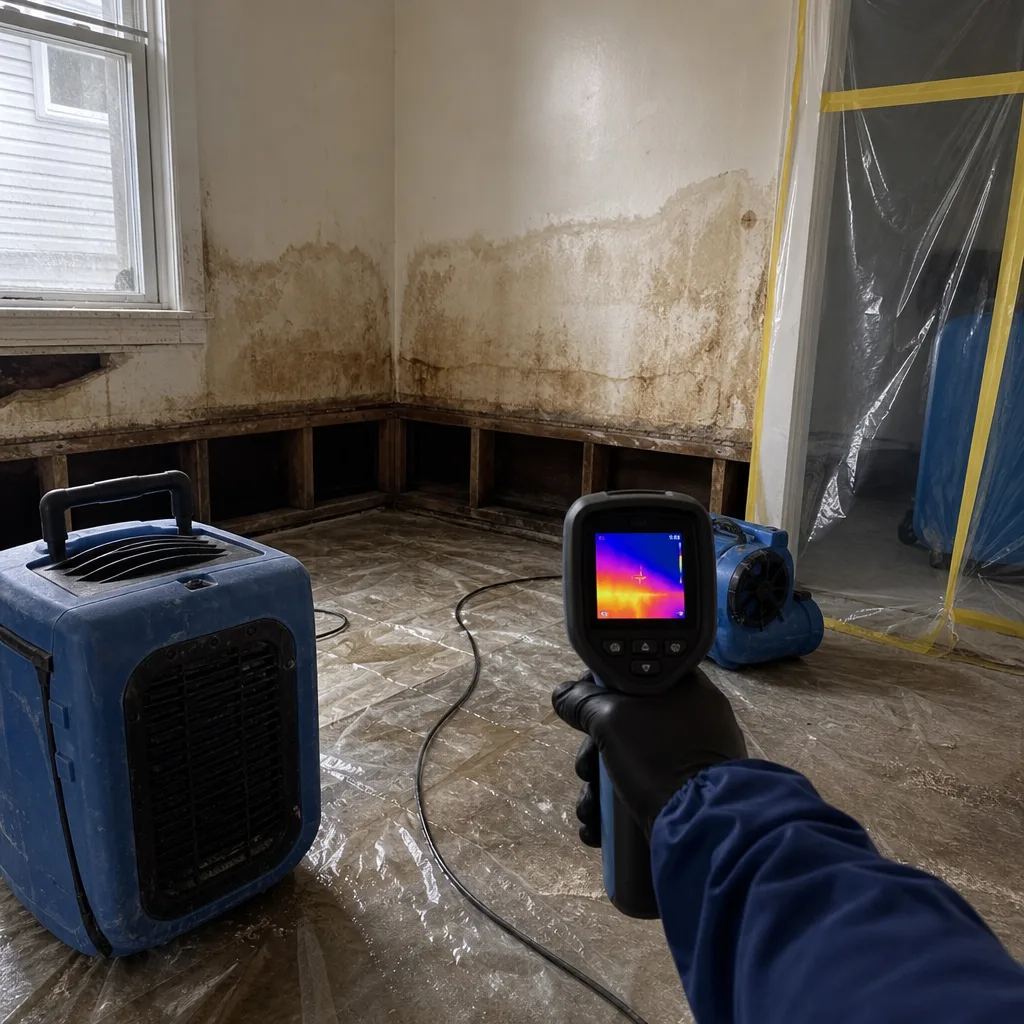 Before
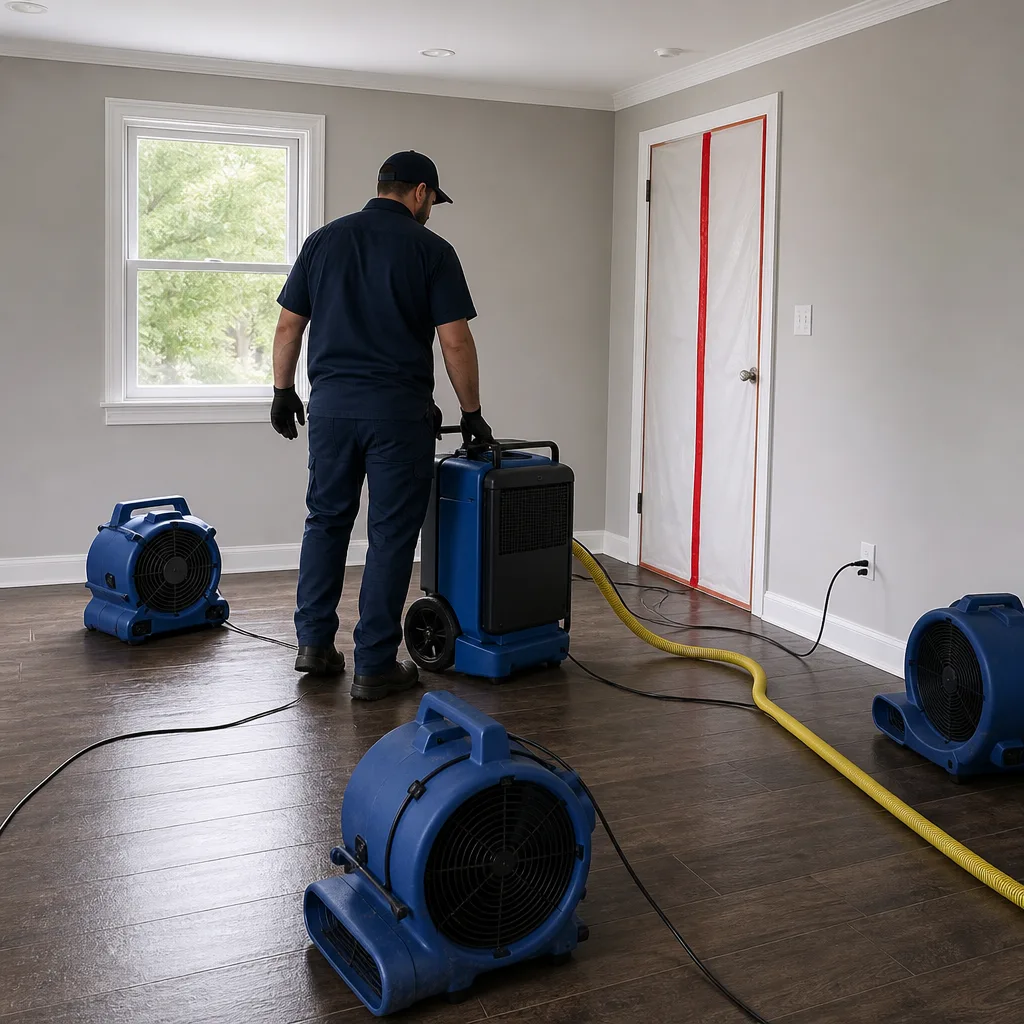 After
After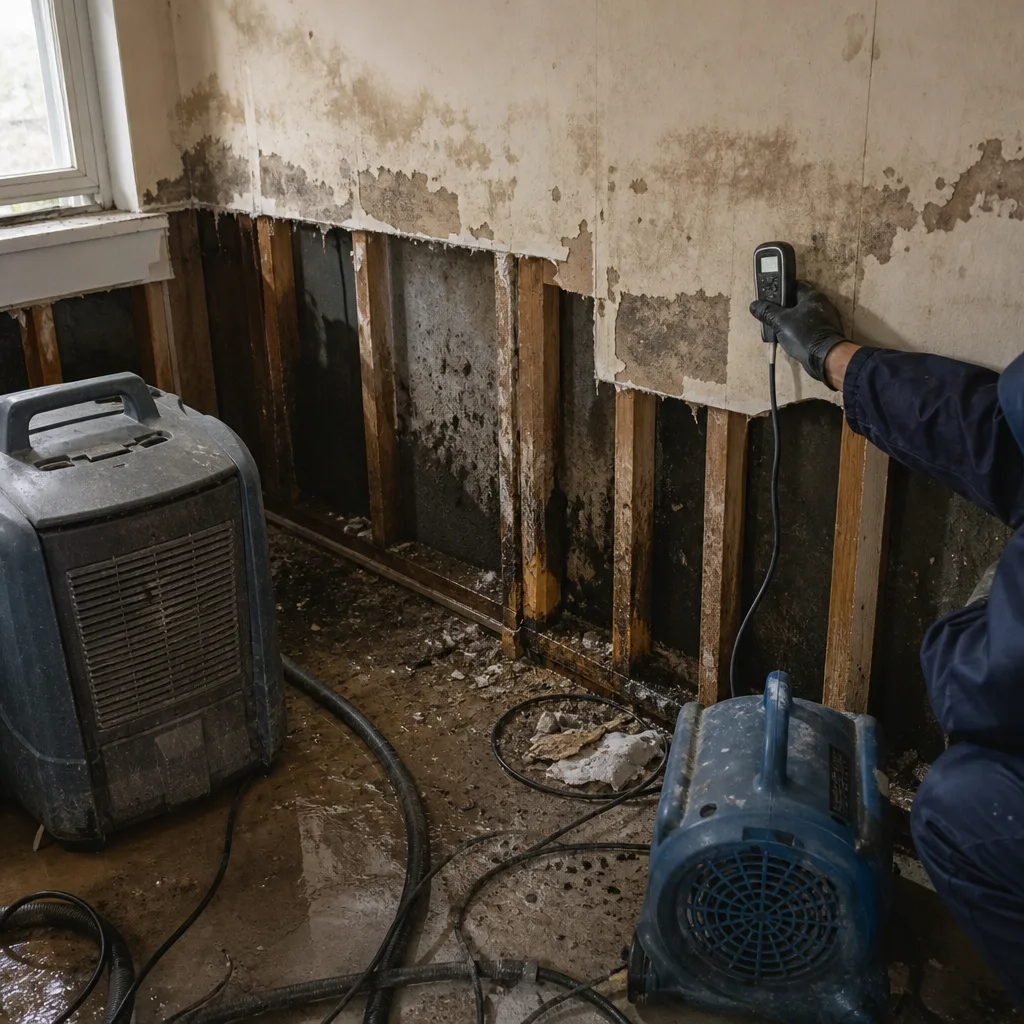 Before
 After
After Before
 After
After