
Last updated October 16, 2026
 Water damage drying
 Fire & smoke cleanup
 Mold remediation
 Storm response
 Sewage cleanup
 Reconstruction
Free visual inspection and a written scope of work before any mitigation begins - photos, moisture readings, and drying logs go in your claim file
The scope we write is the scope we bill. Anything new gets shown to you, in writing, before we touch it.
Get your free estimateDamage Restoration Cost Breakdown: The Hempstead Homeowner’s Reference for 2026
Most Hempstead homeowners never see a restoration invoice coming. Then the washing machine supply line fails at 2 a.m., or a nor’easter drives water under the back door, and suddenly a stranger in a branded truck is quoting numbers that feel disconnected from anything you can verify. The uncomfortable truth: many restoration estimates are built backward, starting with what the job can bear rather than what the work costs. This guide breaks down restoration pricing in Hempstead line by line, so you know what each number on the invoice is buying, what questions to ask before signing, and where the padding hides. By the time you finish, you’ll know more about restoration line items than most people who sell them.
Quick Answer
Water damage restoration in Hempstead typically runs $1,200 to $4,500 for a single-room clean-water event, $4,000 to $12,000 for multi-room gray water incidents, and $15,000+ when black water or structural drying of wall cavities is involved. Mold remediation averages $1,500 to $6,000 depending on containment level and square footage. Fire damage restoration starts around $3,000 for light smoke and climbs past $20,000 for structural repair. These are per-project totals, not per-line guesses, and every legitimate estimator should show you the unit prices behind them.
Restoration work we handle
Table of Contents
- How Damage Category Multiplies Your Base Cost
- Emergency Water Extraction: Per-Gallon and Per-Hour Pricing
- Structural Drying: The Cost Nobody Explains
- Mold Remediation Cost by Containment Level
- Drywall Replacement: Per-Sheet Costs in Nassau County
- The Three Line Items Most Often Billed Without Explanation
- Reading an Adjuster’s Scope vs. a Contractor’s Scope
- How Written-Price-First Changes the Math
How Damage Category Multiplies Your Base Cost
The single biggest factor in your restoration bill is something you’ve probably never heard named: damage category. The IICRC, the body that sets restoration standards, divides water into three categories, and each one multiplies your base cost in predictable ways. Understanding this before a contractor walks your hallways is the difference between paying $1,800 and paying $7,000 for what looks like the same puddle. If you are unsure whether damage is developing, review Damage Restoration Warning Signs: A Hempstead Homeowner’s Reference Guide.
Category 1, clean water, comes from a supply line, a faucet left running, or a water heater that failed without rust. It carries no significant contaminants. The IICRC still requires drying to prevent mold, but the equipment runs fewer days, the antimicrobial requirement is lighter, and disposal costs are minimal. In Hempstead, a Category 1 single-room event with 200 square feet of affected flooring and drywall typically lands between $1,200 and $2,800 when scoped properly.
Category 2, gray water, has been used. Think washing machine discharge, dishwasher overflow, or an aquarium that cracked. It contains soaps, food particles, and microorganisms that multiply fast in Long Island’s humid summers. Category 2 work requires containment, more aggressive antimicrobial treatment, and longer drying times. That same 200 square feet now runs $3,500 to $6,500 in Hempstead.
Category 3, black water, is sewage, storm surge, or groundwater that has entered a foundation. This water carries pathogens and requires full personal protective equipment, hard containment, removal of porous materials, and specialized disposal. A Category 3 event affecting 200 square feet in a Hempstead basement starts at $6,000 and often passes $12,000 once flooring, trim, and the bottom foot of drywall are removed and replaced.
The category is not a sales pitch. It is a standards-based classification that changes the labor, the chemicals, the equipment runtime, and the disposal fees. Ask your estimator to name the category in writing and explain why. If they cannot, that is a signal the pricing is not tied to the actual work.
Our team at Water Damage Restoration in Hempstead documents the category on every written scope, including the reasoning, so the price always connects to the conditions we actually found.
Emergency Water Extraction: Per-Gallon and Per-Hour Pricing
Extraction is the first hour of a water event. Technicians arrive with truck-mounted or portable extraction units and remove standing water before it wicks into drywall and subfloor. This work is priced two ways in Nassau County: per hour of equipment operation or per estimated gallon removed, though the latter is an estimate because no one meters the water coming off your floor.
Hempstead extraction rates in 2026 generally run $75 to $150 per hour for a technician team with equipment, with most single-room extractions completing in two to four hours. On a per-gallon basis, you’ll see $0.75 to $1.50 quoted, but honest contractors will tell you the gallon count is inferred from depth and square footage, not measured. What matters is the hour count: a crew that is still “extracting” six hours into a 200-square-foot event is either under-equipped or padding the clock.
The right follow-up question is not “how much per gallon” but “how many hours of equipment runtime does this square footage require, and what is the per-hour rate.” The answer should be specific enough to hold. A 300-square-foot family room with a quarter inch of Category 2 water should not need more than three hours of extraction with a properly sized unit. A Dri-Eaz truck-mounted extractor moves water in minutes, not hours.
After extraction, the drying phase begins, and that is where the single largest cost in any water restoration job quietly accumulates.
Structural Drying: The Cost Nobody Explains
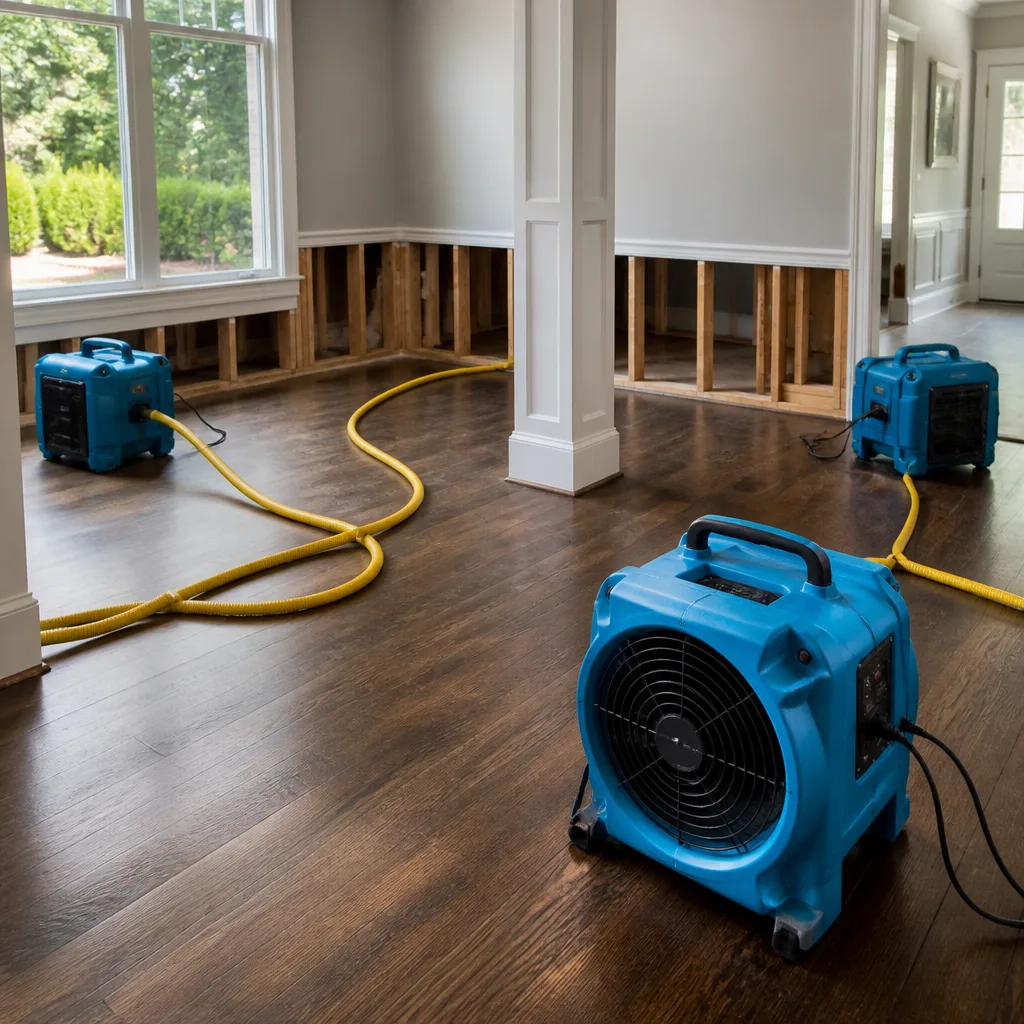
Structural drying is the phase between “water is gone” and “house is dry.” It involves placing air movers to circulate air across wet surfaces and dehumidifiers to pull moisture from the air. Materials continue releasing water for days, sometimes longer, and the equipment has to keep pulling until moisture meters show wood, drywall, and concrete back to normal ranges.
Here is the number Hempstead homeowners rarely hear: dehumidifier rental and operation typically runs $40 to $90 per day per unit at retail. A single room usually needs one dehumidifier. A flooded basement with finished walls may need two or three, plus six to ten air movers at $20 to $40 per day per unit. A five-day drying period for a moderate event can therefore carry $700 to $1,800 in equipment line items alone, before labor, before monitoring, before anything else.
What separates legitimate drying from equipment-dumping is the moisture map. A credentialed technician takes moisture readings before placing equipment, logs the readings daily, and moves or removes units as sections reach dry standard. You should be able to ask “which walls are wet and what numbers are you seeing” and get a direct answer. B-Air and Phoenix units are standard on Hempstead jobs because they move high volumes of air quietly enough for occupied homes, but even the best machines are only as good as the moisture map guiding them.
In our experience, the most common mistake homeowners make is accepting “we’ll dry it until it’s dry” without asking for daily readings. The second most common is paying for equipment that stays three days longer than needed because no one checked the numbers. Ask for the moisture log. It is your house and your meter should be visible in the data.
Mold Remediation Cost by Containment Level
Mold pricing in Hempstead follows containment level, not simply square footage. The IICRC defines containment based on the size of the affected area and whether spores are likely to spread. Each level changes the labor, the materials, and the final price.
Level 1, small isolated areas (10 square feet or less): Typically no full containment required. A HEPA-vacuum pass, antimicrobial wipe-down, and local cleaning handles it. Expect $500 to $1,200 in Hempstead for a properly scoped job.
Level 2, mid-sized areas (10 to 30 square feet): Requires polyethylene sheeting over doorways and HVAC returns, negative air pressure via a HEPA-filtered air scrubber, and sealed disposal bags for removed material. This is the most common residential containment level in Hempstead basements and attics. Plan on $1,800 to $4,000 for the remediation itself, before any rebuilding of removed drywall or insulation.
Level 3, large areas (30 to 100 square feet): Full containment with zippered entry chambers, air scrubbers running continuously, and potentially whole-room air changes. Costs run $4,000 to $8,000 in Nassau County, and this is the level where an honest contractor will walk you through exactly which materials are being removed and what the rebuild scope looks like.
Level 4, extensive (over 100 square feet or HVAC contamination): This is the territory of commercial-scale equipment and sometimes temporary relocation. Pricing starts around $8,000 and goes up from there, with most Hempstead residential jobs at this level tied to long-undetected leaks or storm flooding that sat for weeks.
For a full breakdown of what each level involves at your address, see our Mold Remediation in Hempstead page, where we explain containment, air scrubbing, and the testing we recommend before and after remediation.
Drywall Replacement: Per-Sheet Costs in Nassau County
After water or fire damage, drywall is often the first structural material to go. Contractors price drywall by the sheet installed and finished, and in Nassau County the numbers are higher than national averages because labor rates account for Long Island cost of living and the fact that Hempstead homes run old enough to have plaster-and-lath surprises behind what looks like standard drywall.
In 2026, installing and finishing one 4×8 sheet of half-inch drywall in Hempstead runs $95 to $160 per sheet when part of a larger restoration job. That includes hanging, taping, two to three finish coats, and sanding. For a small 50-square-foot repair using three sheets, you are looking at $300 to $500 in drywall line items. For a 300-square-foot basement wall with removal of the old material, fresh insulation, new drywall, and paint-ready finish, the number lands between $2,500 and $5,000 depending on height, access, and whether it is Level 4 or Level 5 finish.
What drives cost up in Hempstead specifically is the age of the housing stock. Homes built before 1978 may have lead paint under that drywall, which changes removal procedures and cost. Homes with plaster over masonry need different anchoring and skim coats, which reads as higher labor per square foot. A contractor who does not ask about the age of your house before quoting drywall is guessing, and the guess usually goes up after demolition starts.
Ask for the drywall line item to show sheet count, sheet size, finish level, and whether disposal is included. A written scope that says “drywall repair” with one number is not a scope, it is an invitation to negotiate after the wall is open.
The Three Line Items Most Often Billed Without Explanation
Hempstead homeowners regularly pay for three things they never asked about and never had explained: antimicrobial application, equipment monitoring fees, and project management overhead. Each of these can be legitimate. Each is also the most common place to hide markup. Here is what a defensible version looks like.
1. Antimicrobial Application
Antimicrobials are applied to affected framing, drywall backs, and flooring after water extraction to prevent mold from gaining a foothold during drying. The chemical itself costs $8 to $25 per gallon at contractor pricing, and a typical Hempstead basement job uses two to five gallons. The labor is rolling or spraying, and it should take under an hour. A legitimate antimicrobial line item runs $150 to $500 on most jobs. If you see $1,200 for “antimicrobial treatment” on a 300-square-foot event, ask what product, how many gallons, and how many labor hours. Good contractors answer instantly. Others get vague.
2. Equipment Monitoring Fees
Monitoring means a technician returning daily to read moisture meters and adjust equipment placement. It is valuable work when done properly and a waste of your money when it is a drive-by. In Hempstead, monitoring should run $45 to $90 per visit, with most jobs needing three to seven visits. The fee should include the readings being logged and shared with you. If a monitoring fee appears without a stated visit frequency, that is a red flag.
3. Project Management Overhead
Some companies add a line item of 10 to 20 percent for “project management” or “general overhead.” This is not inherently dishonest, but it should be stated before work starts. The problem arises when it appears on the final invoice for the first time. A written-price-first standard eliminates this entirely: the number you agree to is the number you pay. If an estimate arrives without a project management line and the final invoice has one, that is not an adjustment, that is inflation after the fact.
Each of these line items should be justified in plain language on your written scope. If the estimator cannot or will not explain what a line item covers in two sentences, you do not have enough information to sign.
Reading an Adjuster’s Scope vs. a Contractor’s Scope
When insurance is involved, you will see two documents that look similar but are not: the adjuster’s scope and the contractor’s scope. The adjuster’s scope lists what the insurance carrier agrees to pay for. The contractor’s scope lists what the restoration company believes the work actually requires. The gap between them is where Hempstead homeowners get stuck.
Here is how the gap typically appears in Nassau County claims:
- Drying days. The adjuster’s scope may allow three days of equipment. The contractor’s moisture readings may show five days are needed. Insurers use software defaults; contractors use actual wood moisture meters. The fix is submitting daily moisture logs that show the materials are not dry at day three.
- Drywall removal height. Adjusters often scope two feet of drywall removal. Water wicks higher, especially in Hempstead basements with drywall over concrete block. If the moisture meter shows elevated readings at three feet, that extra foot is defensible, but only with documentation.
- Antimicrobial and sealant line items. Some adjuster scopes omit them entirely. Contractors then either swallow the cost or bill you directly. The answer is having the contractor submit the line item with product and square footage before work, not after.
- Content cleaning. Adjusters may scope “wipe-down” where the contractor believes “immersion cleaning” is needed for kitchen items. Photos and a written description from the contractor can close this gap without a fight.
You do not need a public adjuster for most of these gaps. What you need is a contractor who documents everything in writing and photographs every phase. When the contractor’s documentation is detailed and the adjuster’s scope is generic, most carriers will accept the detailed version. When the contractor’s documentation is also generic, you lose. The difference is not the size of the company; it is the specificity of the paperwork.
How Written-Price-First Changes the Math
A written price before work starts is not a nice-to-have. It is the difference between a contract and a negotiation that starts after your drywall is open. Most restore work in Hempstead follows the same pattern: an estimate that feels reasonable, then change orders, then a final invoice that is 30 to 40 percent higher than the initial conversation suggested. Local regulations can also affect pricing, so check Damage Restoration Permits, Codes & Inspections in NY: What You Need to Know before work begins. The homeowner pays because the house is torn apart and the alternative is worse.
The alternative that works better: a detailed written scope with per-unit pricing, delivered before the first tool comes off the truck. You see the sheet count, the drying day count, the per-visit monitoring rate, the containment level, and the antimicrobial product. You sign what you understand. If the job changes because hidden damage is found, that change comes to you in writing with a specific reason and a specific price before the additional work starts.
This is the standard we work to at Tidemark Water Damage Hempstead home, and it is part of the Cedarwell Care Promise that every independently owned location follows. The written price is not a teaser; it is the number.
That said, price is not the only thing that matters. How the crew treats your home matters equally to the families we serve in Hempstead. Shoe covers go on at the door. Drop cloths cover the floor before the first piece of equipment comes in. We use pet-safe drying agents where there is a choice, and lower-decibel settings during school hours and nap time. The job gets done without your home feeling like a job site.
And behind it all sits the 365-Day Done Right Promise: if the restoration is not done right, we make it right. No windows, no fine print, no expiration in the first year. That is the closing argument for why the written price matters; it is attached to a guarantee that stands behind the work long after the truck pulls away.
Common Mistakes to Avoid
- Signing an estimate without per-unit pricing. A one-number estimate cannot be verified. Ask for the sheet count, the drying days, the containment level, and the per-visit monitoring rate. If the estimator will not provide them, the final invoice is likely to be a surprise.
- Accepting “it depends” without a follow-up. “It depends” is sometimes true, but it should always be followed by “on these three things, and here are the price ranges for each.” An estimator who cannot give ranges does not know the trade well enough to price it.
- Paying for equipment that is not monitored. Dehumidifiers that sit for two weeks without daily moisture readings are not drying, they are renting. Ask for the moisture log and the reading schedule before the equipment is placed.
- Letting the adjuster’s scope stand without checking the contractor’s scope against it. The gap is real and it is usually winnable with documentation. Never assume your contractor and your adjuster are on the same page; assume the opposite and verify.
- Rushing into demolition before the category is documented. If gray water is involved, the removal and antimicrobial procedures change. If the category is not documented in writing before demolition starts, you may end up with a mold claim denied later.
- Accepting a final invoice with line items that were not on the written scope. New line items on the final invoice are the single most common billing complaint we hear from Hempstead homeowners who used other companies. A written-price-first standard makes this impossible because the number is agreed before work starts.
- Skipping the photo walkthrough. Photos before, during, and after are your only evidence. Ask for a photo of the clean-up before the crew leaves. If a company will not show you what they did, ask why.
See the difference
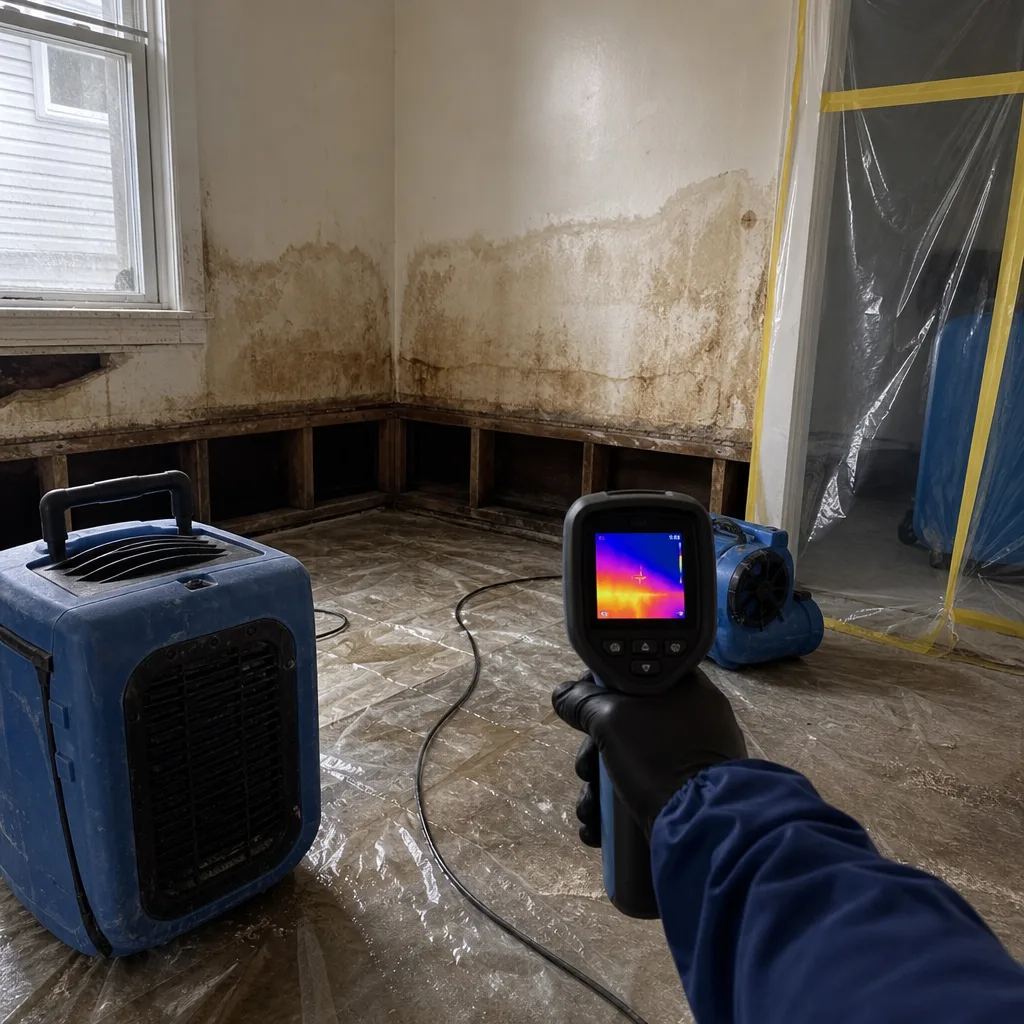 Before
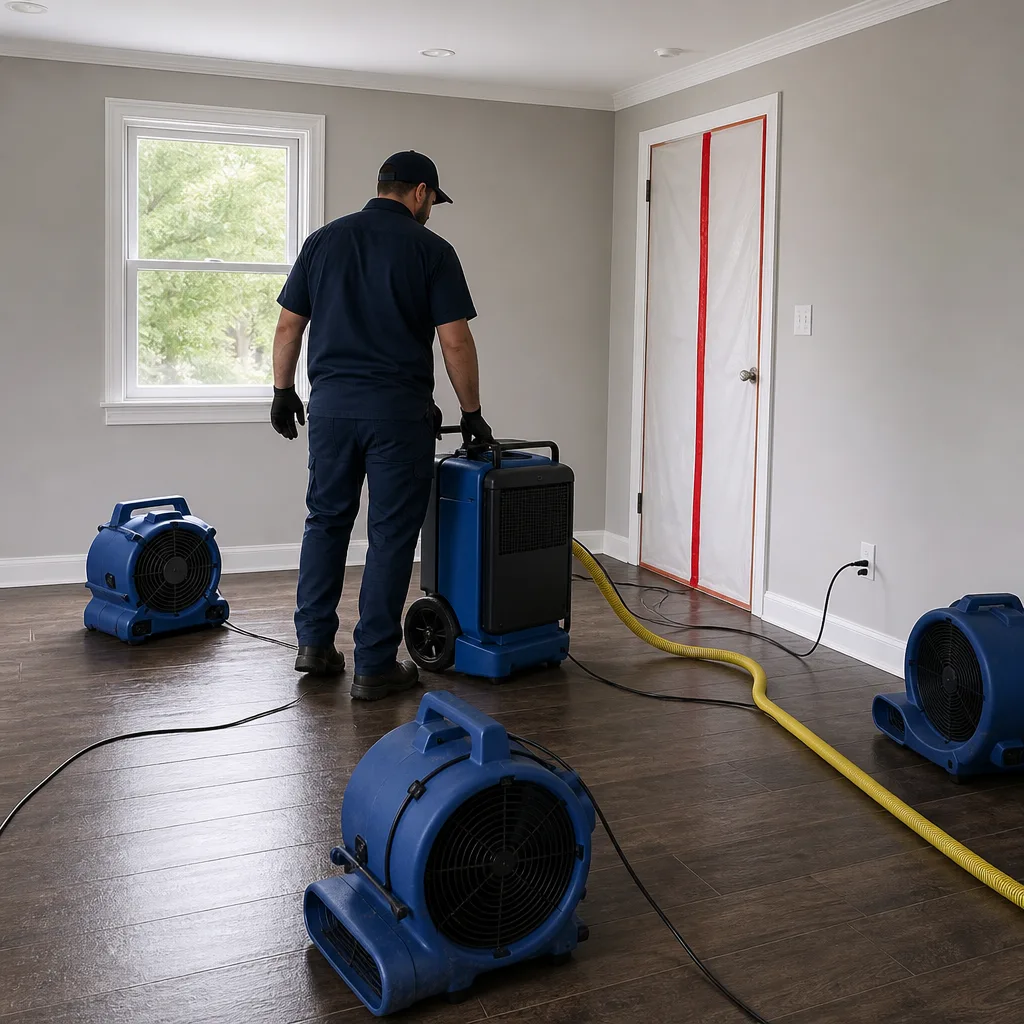 After
After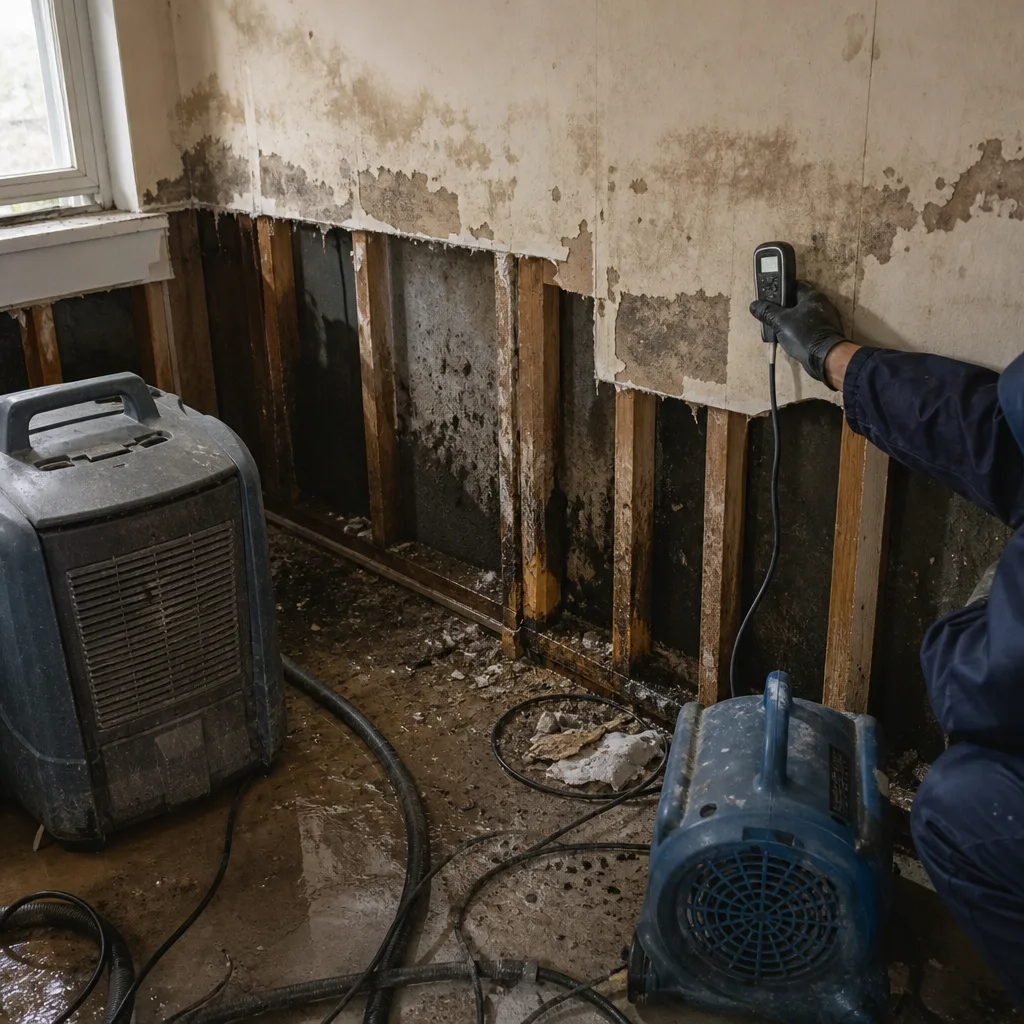 Before
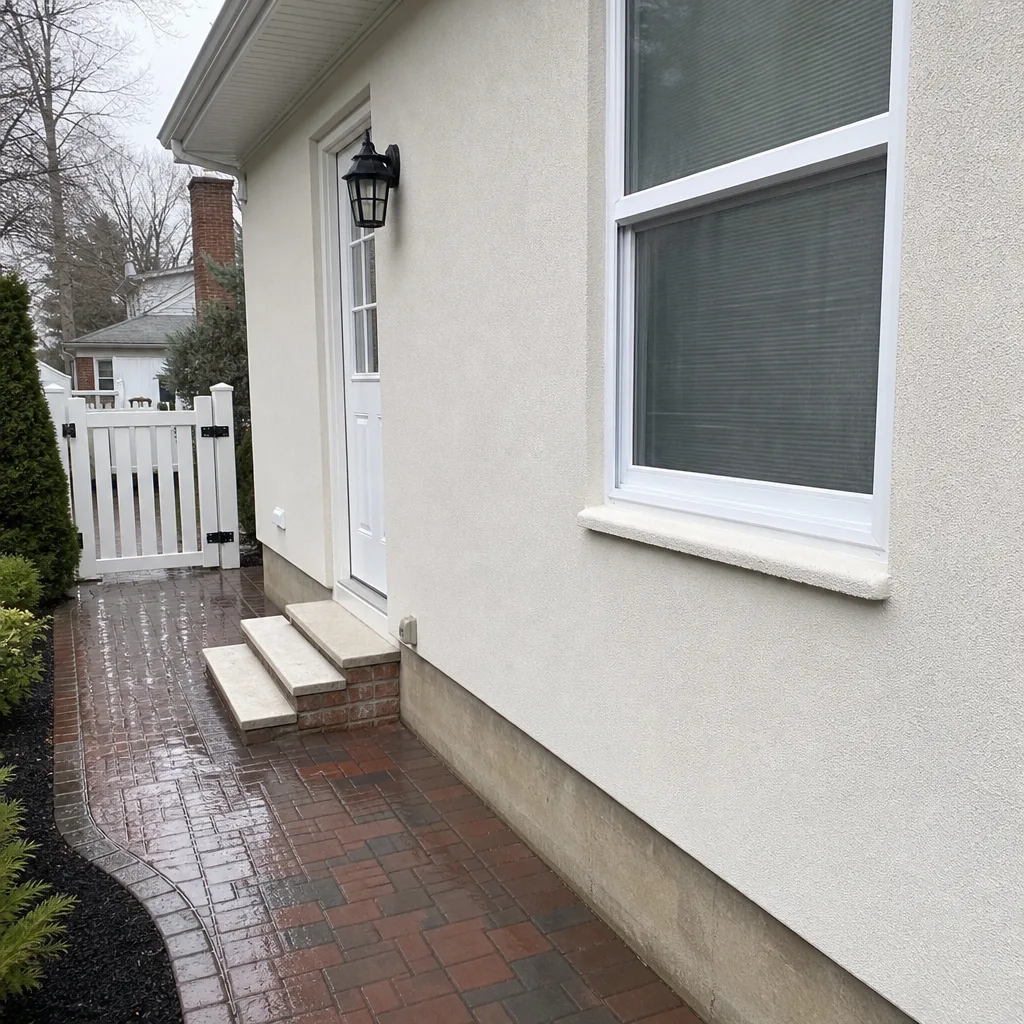 After
After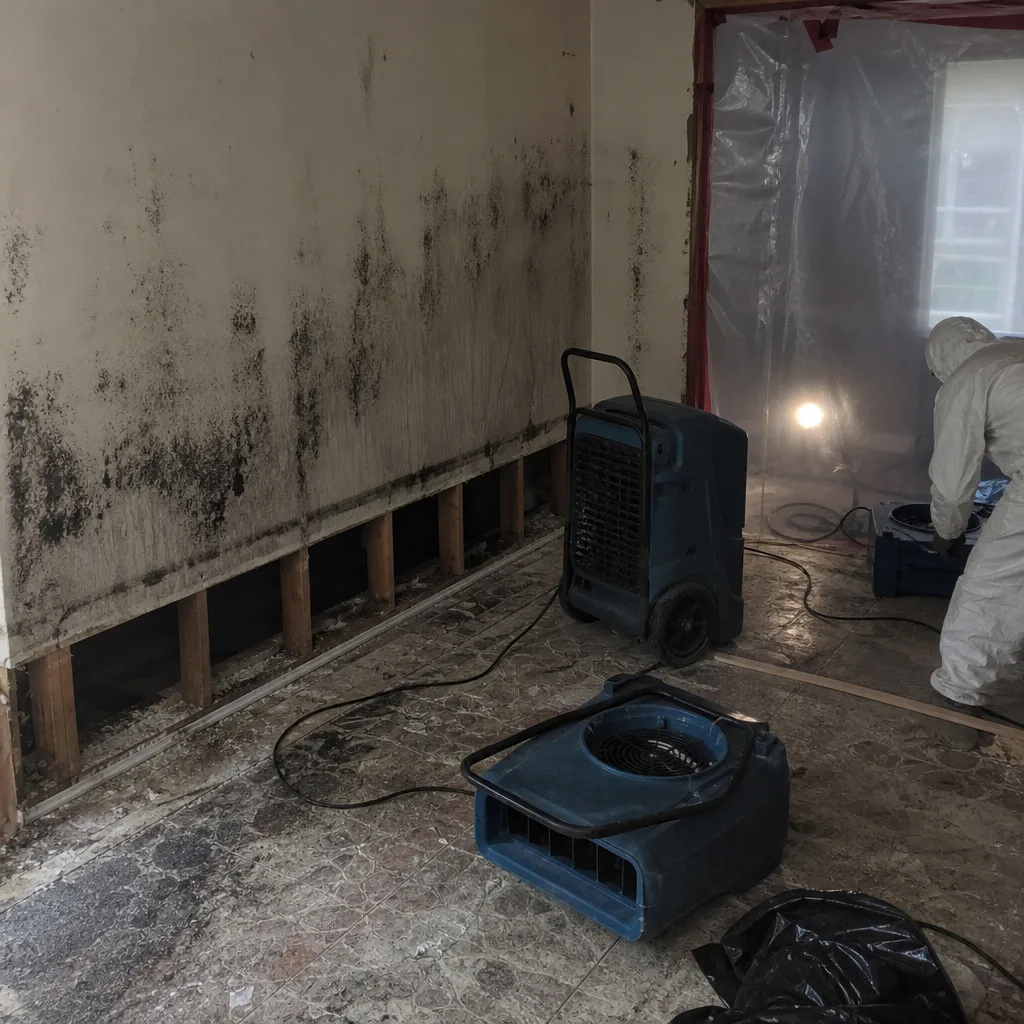 Before
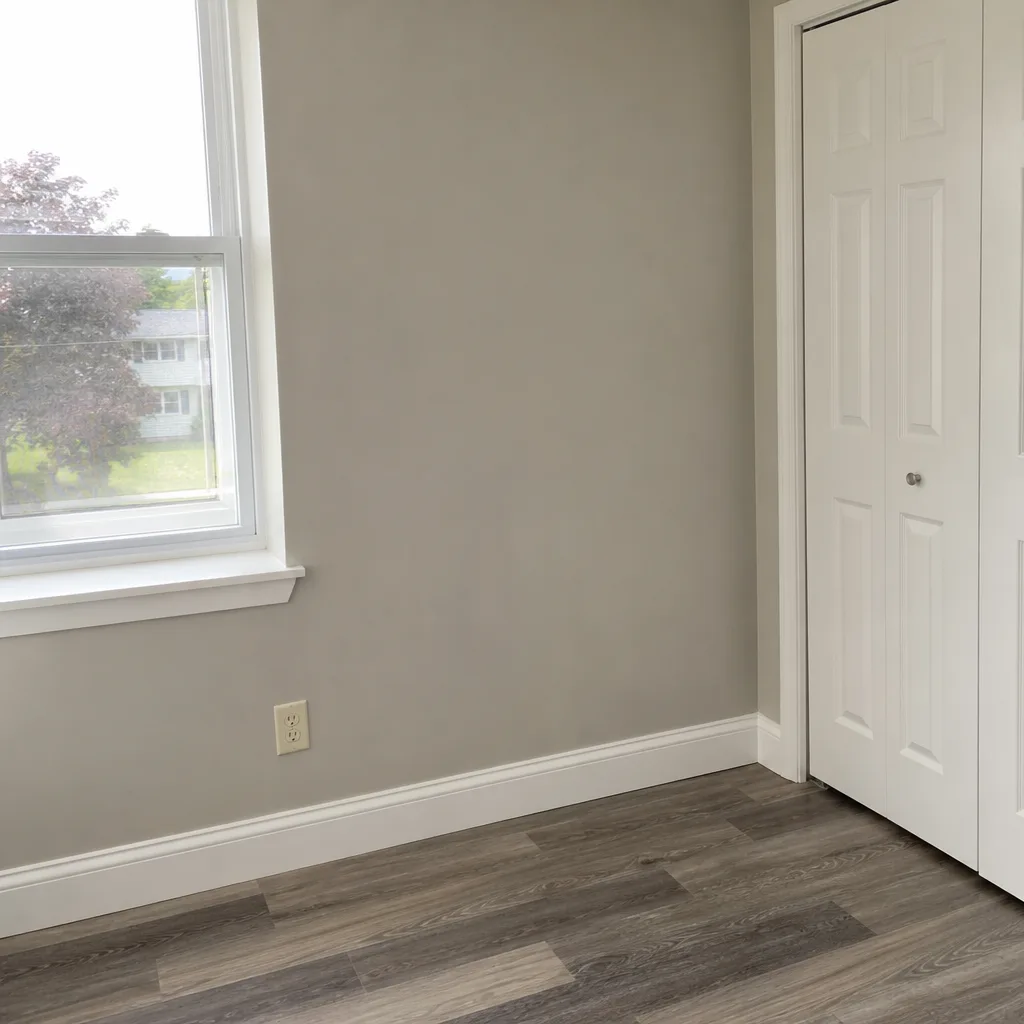 After
AfterWhen to Call a Professional
You need a professional restoration company when water has touched porous materials like drywall, insulation, or wood subfloor and you cannot dry the area within 24 hours. You also need one when the water is Category 2 or Category 3, when mold is visible over an area larger than a dinner plate, or when fire damage has left smoke residue that ordinary cleaning will not remove. Electrical and gas concerns always warrant a professional, and structural drying is not a weekend project. Tidemark Water Damage Hempstead offers free estimates in Hempstead, call (516) 559-4877 and a live person answers, day or night.
Frequently Asked Questions
Water damage restoration in Hempstead typically costs $1,200 to $4,500 for a single-room clean-water event and $4,000 to $12,000 for multi-room gray water or basement flooding. The final number depends on damage category, affected square footage, drying days required, and drywall removal height. Call (516) 559-4877 for a written estimate with per-unit pricing before any work starts.
Black water contains sewage, storm surge, or groundwater with pathogens, which requires full personal protective equipment, hard containment, removal of all porous materials, and specialized disposal. These items are legally required, not optional, and they add $3,000 to $8,000 to a typical Hempstead basement job compared to clean water. The cost difference reflects safety requirements, not markup.
Most homeowners policies cover sudden and accidental water damage from burst pipes or appliance failures, but not gradual leaks or flooding from groundwater. The exact coverage depends on your policy language, and the gap between the adjuster’s scope and the contractor’s scope is where Hempstead homeowners often negotiate. Ask your contractor to document everything with photos and moisture readings to support your claim. We coordinate directly with adjusters and provide photo documentation as a standard step.
During a water emergency, a live person answers our phone 24/7, and our crews dispatch to Hempstead homes within hours, not days. Rapid extraction is the single biggest factor in keeping your total restoration cost down, because every hour water sits in drywall and subfloor adds drying days and increases the chance of mold. Call (516) 559-4877 and you will speak to a person, not a callback queue.
If visible mold covers less than 10 square feet and the moisture source is fixed, a surface cleaning with HEPA vacuuming and an antimicrobial wipe-down may be enough. If mold covers more than 10 square feet, is in wall cavities, or has been present for weeks, full containment and remediation is the honest scope. A proper inspection will tell you which situation you have before you pay for either one.
Ask for a line-by-line explanation of every difference. If the added costs were not presented in writing before the additional work started, you are not obligated to accept them. This is why a written-price-first standard matters; at Tidemark, the number you approve is the number you pay, and any change orders come to you in writing with a reason and a price before the work happens. Get the final invoice, compare it to the written scope, and ask for documentation on every line that changed.
The Bottom Line
Restoration costs in Hempstead follow a structure: damage category sets the base, affected square footage sets the scale, and material type sets the finish work. Homeowners who see the per-unit pricing behind each line item make better decisions and pay less than those who accept a one-number estimate. The most expensive mistake you can make is not the job itself; it is signing away the ability to verify what you are paying for. Ask for the written price first, the moisture log during, and the photo walkthrough after. The companies that do this naturally are the ones worth calling back. If you are standing in water in Hempstead right now, call (516) 559-4877. A live person answers, the written price comes before the work, and the crew leaves your home clean enough to prove it.
Written by Rick Sumner, Owner at Tidemark Water Damage Hempstead, serving Hempstead since 2006.