
Last updated October 16, 2026
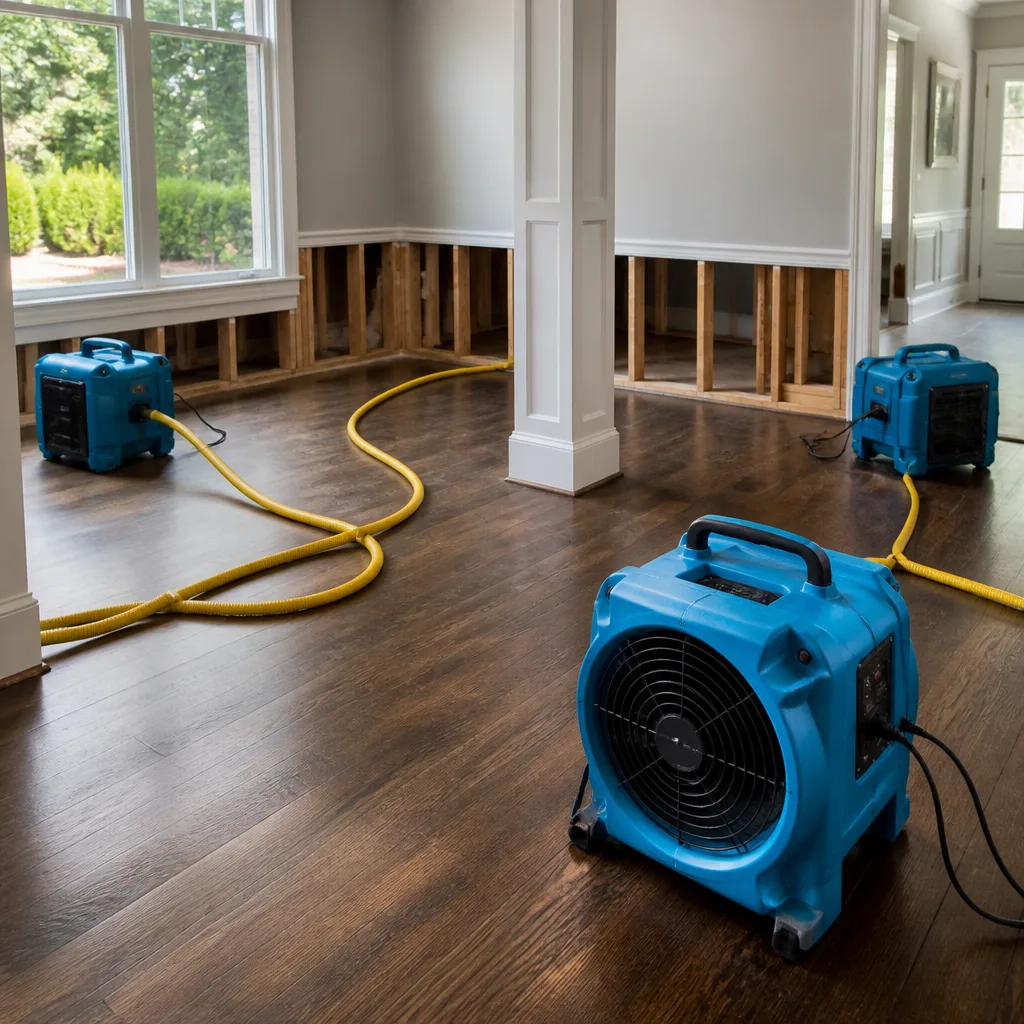 Water damage drying
 Fire & smoke cleanup
 Mold remediation
 Storm response
 Sewage cleanup
 Reconstruction
Free visual inspection and a written scope of work before any mitigation begins - photos, moisture readings, and drying logs go in your claim file
The scope we write is the scope we bill. Anything new gets shown to you, in writing, before we touch it.
Get your free estimateDamage Restoration Permits, Codes & Inspections in NY: What You Need to Know
Here’s something most Hempstead homeowners don’t discover until the day they list their house: a restoration crew can legally replace every sheet of drywall in your living room without pulling a permit, but if they open that wall and sister one floor joist, the entire job just crossed into permit territory under Nassau County code. A buyer’s inspector will find that unpermitted structural repair, and suddenly the fix you paid for five years ago becomes a disclosure problem on the sale. This guide walks through exactly which restoration tasks in Nassau County require a Building Department permit, which are trade-work exempt, how New York’s mold law affects contractors working in your home, and what an inspector should physically show you at each stage. We’ll also cover the FEMA flood zone rules that apply to southern Nassau County homes and the inspection sequence that keeps your insurance claim moving instead of freezing mid-payout.
Restoration work we handle
Quick Answer
In Nassau County, cosmetic restoration work like drywall replacement, painting, flooring, and non-structural mold remediation is exempt from Building Department permits, but any work touching structural framing, foundation, electrical rewiring, plumbing rough-in, or roof structure requires a permit filed with the Nassau County Building Department. Skipping that permit on structural work can trigger a stop-work order, freeze your insurance claim, and surface during a future home sale inspection as an unpermitted repair you must disclose. Always get the permit question answered in writing before demolition starts.
Table of Contents
- Which Restoration Tasks Need a Nassau County Permit vs. Which Are Exempt
- How New York’s Mold Remediation Law (Labor Law Article 32) Applies to Hempstead Homes
- Why Skipping a Permit Can Trigger a Stop-Work Order and Freeze Your Insurance Claim
- The Inspection Sequence for a Fully Permitted Restoration: What You Should See at Each Stage
- How FEMA Flood Zone Designations in Southern Nassau County Affect Restoration Codes
- Elevation Certificates: What They Are and When Restoration Triggers One
- Homeowner Rights During Restoration: Documentation, Access, and the Written Scope
- Common Mistakes to Avoid
- When to Call a Professional
- Frequently Asked Questions
- The Bottom Line
Which Restoration Tasks Need a Nassau County Permit vs. Which Are Exempt
The line between permitted and exempt work in Nassau County comes down to one question: does the work alter structure, electrical, plumbing, or life-safety systems? If the answer is no, you’re generally in exempt territory. If the answer is yes, you need the Building Department involved before work starts.
Here’s the clearest way to think about it. When water damage soaks drywall in a Hempstead home, replacing that drywall is a cosmetic repair. The wall’s structural framing underneath is typically unharmed, and the Building Department has no interest in sheetrock. But water doesn’t always stop at the drywall. If moisture sat long enough to compromise a floor joist, a sill plate, or a load-bearing header, the repair is no longer cosmetic. It’s structural, and Nassau County code requires a permit and an inspection.
The table below breaks down the most common restoration tasks we see in Hempstead homes:
| Restoration Task | Permit Required? | Why |
|---|---|---|
| Water extraction and structural drying | No | Emergency mitigation, no structural alteration |
| Drywall replacement (non-structural) | No | Cosmetic finish work |
| Painting and finish flooring | No | Cosmetic |
| Mold remediation (non-structural, containment-based) | No | Labor Law Article 32 governs licensing, not building permit |
| Sistering a floor joist or roof rafter | Yes | Structural alteration |
| Replacing a load-bearing wall or header | Yes | Structural alteration |
| Re-wiring electrical damaged by water or fire | Yes | Electrical code compliance and life safety |
| Plumbing rough-in replacement | Yes | Plumbing code and leak testing |
| Foundation repair or underpinning | Yes | Structural, requires engineered drawings |
| Roof sheathing replacement (any area) | Yes | Structural roof component |
One thing worth stating clearly for Hempstead homeowners: the permit is the contractor’s responsibility to pull, but the legal liability for unpermitted work ultimately lands on the homeowner’s property record. When you hire a restoration company, ask the direct question: “If this job uncovers structural damage, who pulls the permit and who pays the fee?” Get the answer in writing before demo starts. Our How to Hire a Damage Restoration Contractor in Hempstead: A Step-by-Step Guide covers the exact questions to ask. A reputable company will answer without hesitation. If they dodge the question, that tells you something.
For context on how water damage restoration work flows in Hempstead homes, see our guide to Water Damage Restoration in Hempstead.
How New York’s Mold Remediation Law (Labor Law Article 32) Applies to Hempstead Homes
New York’s Labor Law Article 32 is the piece of state legislation most homeowners have never heard of until they need mold work done. It went into effect in 2016 and created the first statewide licensing requirement for mold remediation contractors. Here’s the direct answer: any contractor performing mold assessment or remediation on a residential property in Hempstead must hold a New York State mold remediation license, and every technician on-site must have completed specific state-approved training. If a company cannot produce a license number when asked, they are not legally permitted to perform mold work in your home.
Article 32 does three things that matter to a Hempstead homeowner:
- It separates assessment from remediation. A licensed mold assessor evaluates the scope of mold contamination. A licensed mold remediator performs the actual removal. One company cannot perform both roles on the same project. This separation prevents the conflict of interest where a company “finds” mold and then “fixes” it for an inflated price.
- It requires a written work plan. Before remediation begins, the licensed contractor must provide the homeowner a written scope of work that includes containment methods, the specific areas to be treated, and the post-remediation verification process. You should never agree to mold removal without this document in hand.
- It gives you the right to clearance testing. After remediation is complete, the homeowner has the right to independent clearance testing by a third-party assessor. This test confirms spore counts have returned to acceptable levels before containment is removed and your family re-enters the space.
In our experience working in Hempstead homes, the clearance test is the piece most often skipped, usually because the homeowner doesn’t know it exists. Ask for it. A legitimate mold remediation company will expect the question and welcome the independent verification.
For more on how mold remediation works in Hempstead specifically, see Mold Remediation in Hempstead.
Why Skipping a Permit Can Trigger a Stop-Work Order and Freeze Your Insurance Claim
Here’s the scenario we see too often in Hempstead: a homeowner has water damage, calls a restoration company, the crew starts demo, finds a rotted joist, and “fixes” it without pulling a permit. Everything looks fine for a few weeks. Then a neighbor calls the Building Department about construction debris, or an insurance adjuster revisits the claim and asks for the permit documentation. Within days, a stop-work order goes up on the door.
A stop-work order means exactly what it sounds like: all work on the property stops immediately. The contractor walks off the job. The insurance company flags the claim for review. The homeowner is now in a worse position than they were before the restoration started, because now they’re paying out of pocket to correct the unpermitted work just to get the project moving again.
And here’s the part most people don’t understand: the insurance claim and the permit are connected in ways that aren’t obvious. Most property insurance policies contain language requiring repairs to be completed to local code and in compliance with all applicable laws. If a restoration project is unpermitted, the insurance carrier can withhold payment on the structural portion of the claim, slow down the entire claim while they investigate, or in the worst case, deny the claim and leave the homeowner holding the full repair bill. A permit is not just bureaucracy. It’s the paper trail that keeps your claim payout moving.
The fix is simple. Before demo begins, ask your restoration contractor: “If you find structural damage, what is your permit process?” A professional company will have a process. They’ll know the Nassau County Building Department requirements, they’ll have a relationship with a local expeditor if needed, and they’ll include the permit fee in their written scope so you see the full cost up front.
The Inspection Sequence for a Fully Permitted Restoration: What You Should See at Each Stage
When a restoration project in Hempstead requires a permit, the work passes through a defined inspection sequence. You shouldn’t be in the dark about it. Here’s what a fully permitted structural restoration should look like, stage by stage, and what you should physically see and receive as the homeowner:
- Plan review. The contractor or expeditor files plans with the Nassau County Building Department. For structural repairs, the plans are reviewed for code compliance. You should receive a copy of the filed permit and the approved plans. The permit number and inspection schedule should be posted on-site.
- Rough framing inspection. After the damaged structure is removed and new framing is installed, but before any insulation or drywall goes up, the first inspection happens. The inspector checks the size and spacing of new joists, the connections, and the load path. You should be present or have your contractor walk you through what was done. Take photos of the exposed framing before it gets covered. These photos are your evidence of what’s behind the walls.
- Insulation inspection. In some Nassau County restoration projects, an insulation inspection is required before the walls are closed. The inspector verifies the R-value and that the insulation is properly installed. This is particularly relevant if the restoration involved exterior walls.
- Final inspection. After drywall, tape, and finish work are complete, the Building Department performs a final inspection and issues a final sign-off. You should receive a copy of the inspection sign-off or a Certificate of Compliance, depending on the scope of work.
Here’s the homeowner’s role: you should receive a written scope before work starts, a copy of the filed permit when it’s issued, photo documentation of the work at each stage (especially before walls are closed), and final inspection documentation when the project is complete. If your contractor is not providing these, ask why.
For Hempstead homeowners dealing with fire damage specifically, the permitted scope often expands quickly because fire can compromise structural members that looked intact during the initial assessment. See Fire Damage Restoration in Hempstead for how that process works.
How FEMA Flood Zone Designations in Southern Nassau County Affect Restoration Codes
Southern Nassau County includes significant FEMA-designated flood hazard areas, and Hempstead sits squarely in a region where flood zone rules directly interact with local building codes. If your home carries a flood zone designation and restoration work is triggered by a flooding event, the restoration is governed by a layered set of rules: the Nassau County Building Code, the New York State Residential Code, and the FEMA National Flood Insurance Program (NFIP) requirements enforced by the local floodplain administrator.
The key concept is substantial damage. Under NFIP rules, if the cost to restore a flood-damaged home meets or exceeds 50% of the structure’s pre-damage market value, the home is considered “substantially damaged” and must be brought into full compliance with current floodplain management regulations. For many homes in southern Nassau County, that means one of two outcomes: elevating the home above the Base Flood Elevation (BFE), or completing a floodproofing retrofit if the structure is not a residential building. Elevating a home is a major undertaking, and it’s one of the most expensive surprises a flood-restoration project can deliver.
Even when damage falls below the 50% threshold, flood zone restoration carries specific code requirements. Any electrical panel, outlet, HVAC unit, or water heater replaced as part of the restoration must be elevated above the BFE or protected by flood-resistant installation methods. Wood-framed walls in flood zones require specific moisture-resistant construction details. The restoration contractor must know these requirements, because a standard “replace what was there” approach will fail inspection in a flood zone.
If your Hempstead home is in a flood zone, ask your restoration company two questions before work starts: “Do you know what flood zone this property is in?” and “Does this restoration trigger any FEMA elevation requirements?” If they look confused, you’re talking to the wrong company.
Elevation Certificates: What They Are and When Restoration Triggers One
An elevation certificate is a formal document prepared by a licensed surveyor or engineer that certifies the elevation of your home’s lowest floor, mechanical equipment, and surrounding ground relative to the Base Flood Elevation for your area. It’s the document that determines your flood insurance premium and whether your home meets local floodplain ordinance requirements.
You may need an elevation certificate in several restoration scenarios in Hempstead:
- After substantial flood damage. If restoration costs approach the 50% threshold, your floodplain administrator will require an elevation certificate to determine the home’s current compliance status before work can proceed.
- When selling a home in a flood zone after restoration. A prospective buyer’s flood insurance quote will require an elevation certificate, and the buyer’s inspector will compare the home’s current elevation against recorded documents. If restoration work altered the home’s footprint or grade, the certificate must be updated.
- When any structural elevation work occurs. If the restoration includes raising the home or any part of it to meet flood code, a new elevation certificate is required as part of the final documentation.
An elevation certificate costs between $600 and $1,200 in the Hempstead area depending on the property and the surveyor. It’s not included in standard restoration pricing. If your flood restoration requires one, factor it into the overall project budget from the start rather than discovering the expense at the end.
We mention elevation certificates because they’re the document most commonly missing when homeowners try to sell a flood-restored home in Nassau County. The buyer’s mortgage company will ask for it. If it isn’t there, the sale stalls. Getting it during the restoration, while the surveyor is already familiar with the property, is far cheaper than getting it five years later under closing pressure.
Homeowner Rights During Restoration: Documentation, Access, and the Written Scope
Restoration work inside your home is not a black box. You have specific rights under both Nassau County code and New York state law, and understanding those rights changes how the entire project goes.
First: the written scope. Before any restoration work begins in your Hempstead home, you have the right to a written document that spells out exactly what will be done, what materials will be used, and what the work will cost. This is not a handshake agreement. If a restoration company starts demolition without a written scope, they’ve already violated a basic professional standard. The written scope is also the document your insurance adjuster uses to verify that the work claimed on your policy is the work actually performed. If the scope doesn’t match the insurance estimate, that mismatch gets flagged.
Second: photo documentation. You have the right to see photographic evidence of what the restoration crew found and what they did. Before walls are closed, before floors are reinstalled, before the crew walks out the door, ask for photos. A professional restoration company in Hempstead will provide them without being asked. We take a photo of the clean-up before the crew leaves every job, and we share it with the homeowner. That photo is not a courtesy. It’s the record of exactly what was done and how the home was left.
Third: the right to ask what products are being used. If you have children, pets, or family members with respiratory sensitivities, ask what drying agents, antimicrobials, or sealants are being applied. You have the right to know. You also have the right to request alternatives where they exist. This is a standard question in Hempstead homes with young families, and it should never be met with a shrug.
Common Mistakes to Avoid
- Letting the restoration company decide the permit question without documenting the answer. A verbal “you don’t need a permit” means nothing when the building inspector knocks. Ask the question in writing and keep the response. If the company won’t put it in writing, find another company.
- Allowing demo to start before a written scope exists. Once the walls are open, the leverage shifts. Suddenly the project “found more damage” and the price goes up. A written scope agreed before demo starts is your protection.
- Skipping the post-mold-remediation clearance test. New York Labor Law Article 32 gives you the right to independent verification that mold levels have returned to normal. Don’t waive it. The test costs a few hundred dollars. Skipping it can leave mold spores circulating in a Hempstead home for months.
- Filing an insurance claim for structural restoration without permit documentation. The carrier will ask. If the permit wasn’t pulled, the structural portion of your claim freezes. Pull the permit, file the documentation, keep the claim moving.
- Using a restoration company that doesn’t know Nassau County flood zone rules. Rebuilding a flood-damaged home in southern Nassau County requires flood-specific code knowledge. A company that restores a flood-damaged home with standard materials and standard elevations will fail inspection and leave you paying for the correction.
- Waiting until the inspection to document the work. Take photos at every stage: framing, insulation, drywall, finish. When a future buyer’s inspector asks what was done behind that wall, your photo file is the answer.
When to Call a Professional
There are scenarios where the permit question is simple enough to answer yourself, and there are scenarios where you need a professional who knows Hempstead and Nassau County code. You need a professional when structural members are involved, when electrical or plumbing work is part of the restoration, when your home is in a FEMA flood zone, or when your insurance claim is substantial enough that the documentation trail matters. You also need a professional when the restoration company you’re talking to can’t clearly explain the permit process. That’s the red flag that tells you to walk away. For Damage Restoration Warning Signs: A Hempstead Homeowner’s Reference Guide, see our companion post.
Tidemark Water Damage Hempstead offers free estimates in Hempstead and writes the scope before any work starts. We walk homeowners through the permit question on every job, document every stage with photos, and our crews treat your floors and furnishings as if they were our own. Call (516) 559-4877 for a free estimate and straight answers on permits, codes, and the restoration process. Learn more about who we are at Tidemark Water Damage Hempstead home.
Frequently Asked Questions
No, you do not need a Building Department permit in Nassau County to replace non-structural drywall after water damage. The exemption applies as long as the underlying framing is intact and the work does not involve electrical, plumbing, or structural alteration. Call (516) 559-4877 if you need help confirming whether your specific project falls into exempt or permitted territory.
Unpermitted structural work surfaces during the buyer’s inspection or title search, and you’ll be required to disclose it. The buyer may demand the work be permitted retroactively, which involves opening walls, hiring an engineer, and paying fees and penalties. It’s almost always more expensive than pulling the permit in the first place. Call (516) 559-4877 to talk through your situation before the work starts.
Yes. For structural repairs, most property insurance carriers require proof that work was completed in compliance with local building codes, and a permit is the standard evidence. Without it, the carrier may withhold payment on the structural portion of the claim or flag the claim for investigation. Call (516) 559-4877 for help documenting your restoration correctly from day one.
A mold clearance test is an independent air and surface sampling performed after remediation to confirm spore counts have returned to normal baseline levels before containment is removed. Under New York Labor Law Article 32, you have the right to this test, and you should absolutely exercise it. A few hundred dollars protects your family from living with incomplete remediation. Call (516) 559-4877 to discuss mold work in your Hempstead home.
Flood zone homes in southern Nassau County are subject to FEMA’s substantial damage rule: if restoration costs reach 50% of the home’s pre-damage value, the home must be brought into full floodplain compliance, which may include elevation. Below that threshold, electrical and mechanical equipment replaced during restoration must be elevated above the Base Flood Elevation. Call (516) 559-4877 to find out what applies to your property.
In Nassau County, the licensed contractor performing the work should pull the permit, and the permit fee should be included in your written scope. The legal liability for unpermitted work ultimately attaches to the property and the homeowner, which is why you should confirm the permit process in writing before demo starts. Call (516) 559-4877 for a free estimate that includes clear permit guidance.
The Bottom Line
Restoration permits in Nassau County are the difference between a repair that holds up and a liability that follows the property. Cosmetic work like drywall replacement and non-structural mold remediation is exempt. Structural work, electrical, plumbing, and flood-zone compliance are not. The mold law in New York gives you rights to a written scope, licensed contractors, and independent clearance testing. The inspection sequence protects you from paying for work that was never verified. And the FEMA rules in southern Nassau County add a layer that standard restoration companies miss. For more guides & resources on protecting your Hempstead home, explore our blog. Ask the permit question in writing before demo starts, document every stage, and if you’re anywhere in Hempstead with a restoration need, call (516) 559-4877. We’ll write the scope first, explain the permits in plain language, and leave your home with photo proof of the work done and the floors protected.
Written by Rick Sumner, Owner at Tidemark Water Damage Hempstead, serving Hempstead since 2006.
See the difference
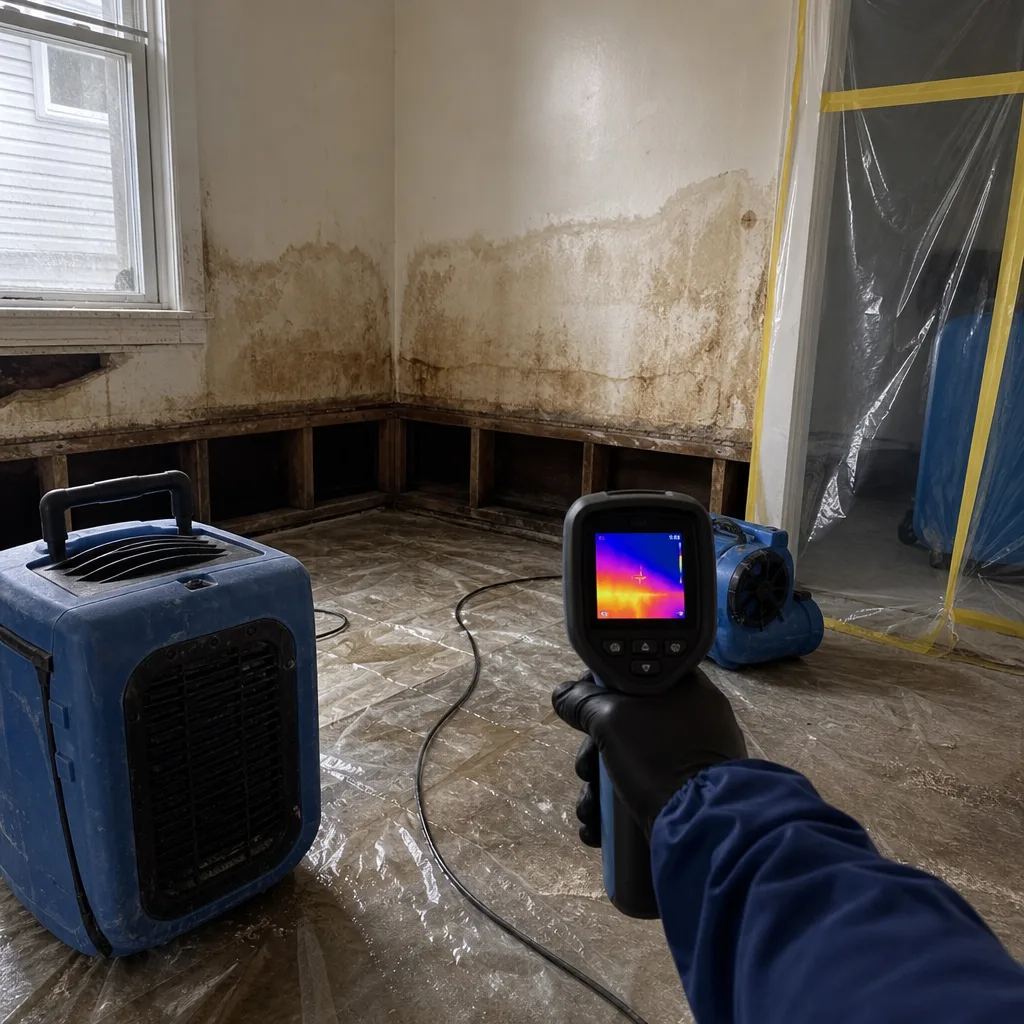 Before
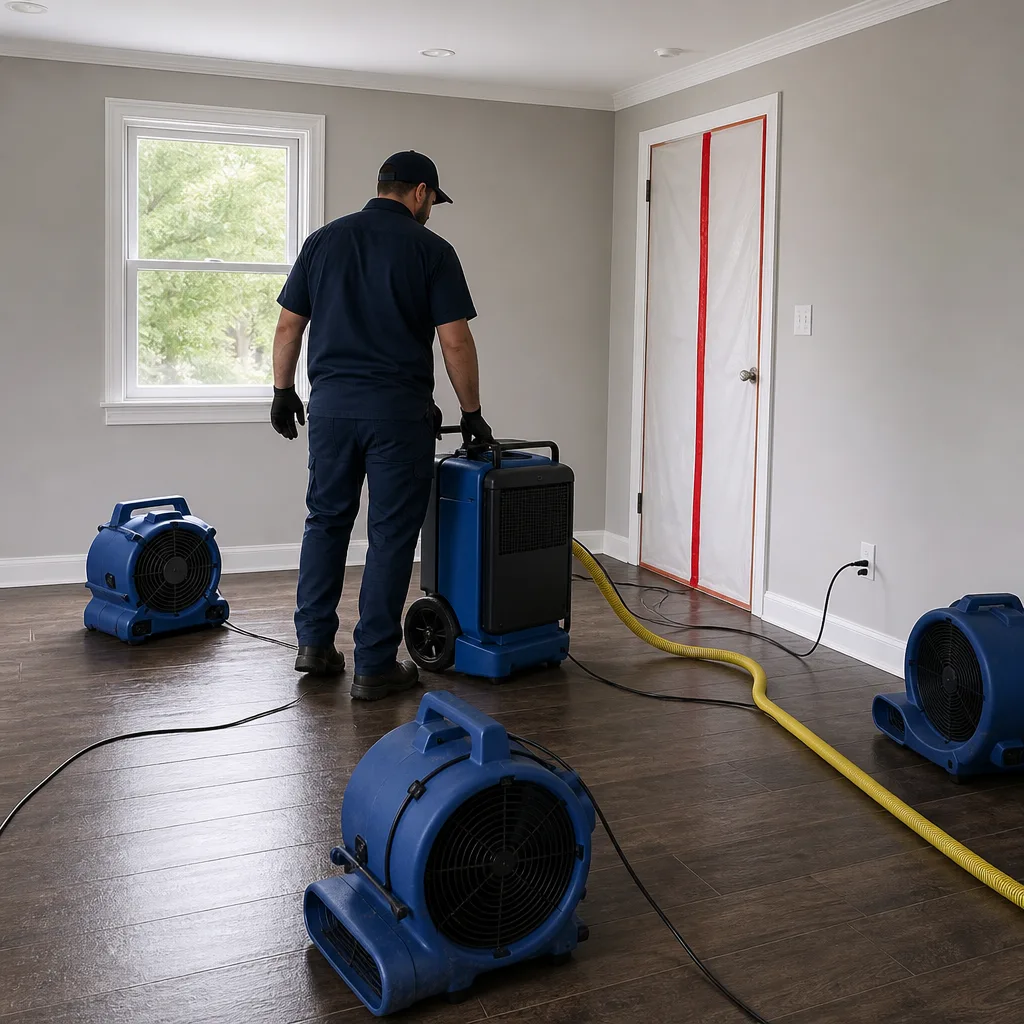 After
After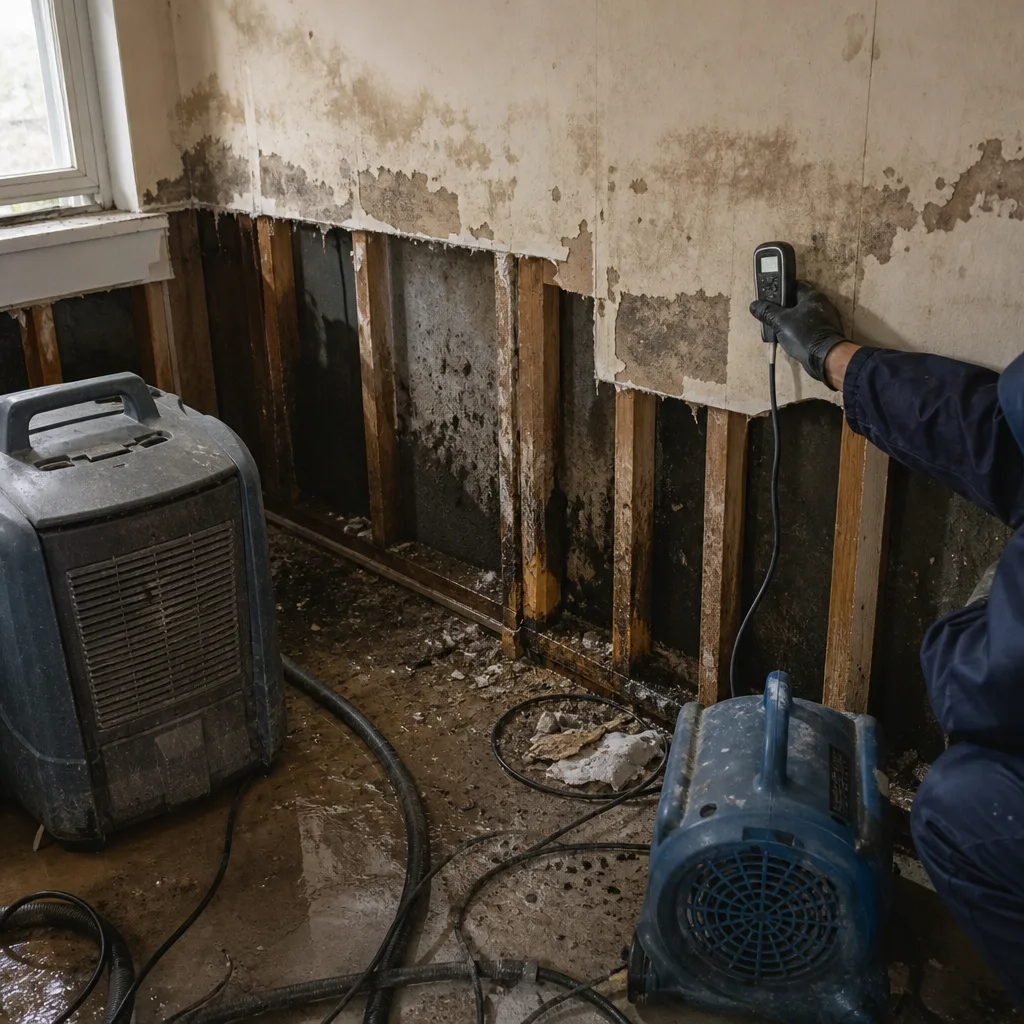 Before
 After
After Before
 After
After