
Last updated October 16, 2026
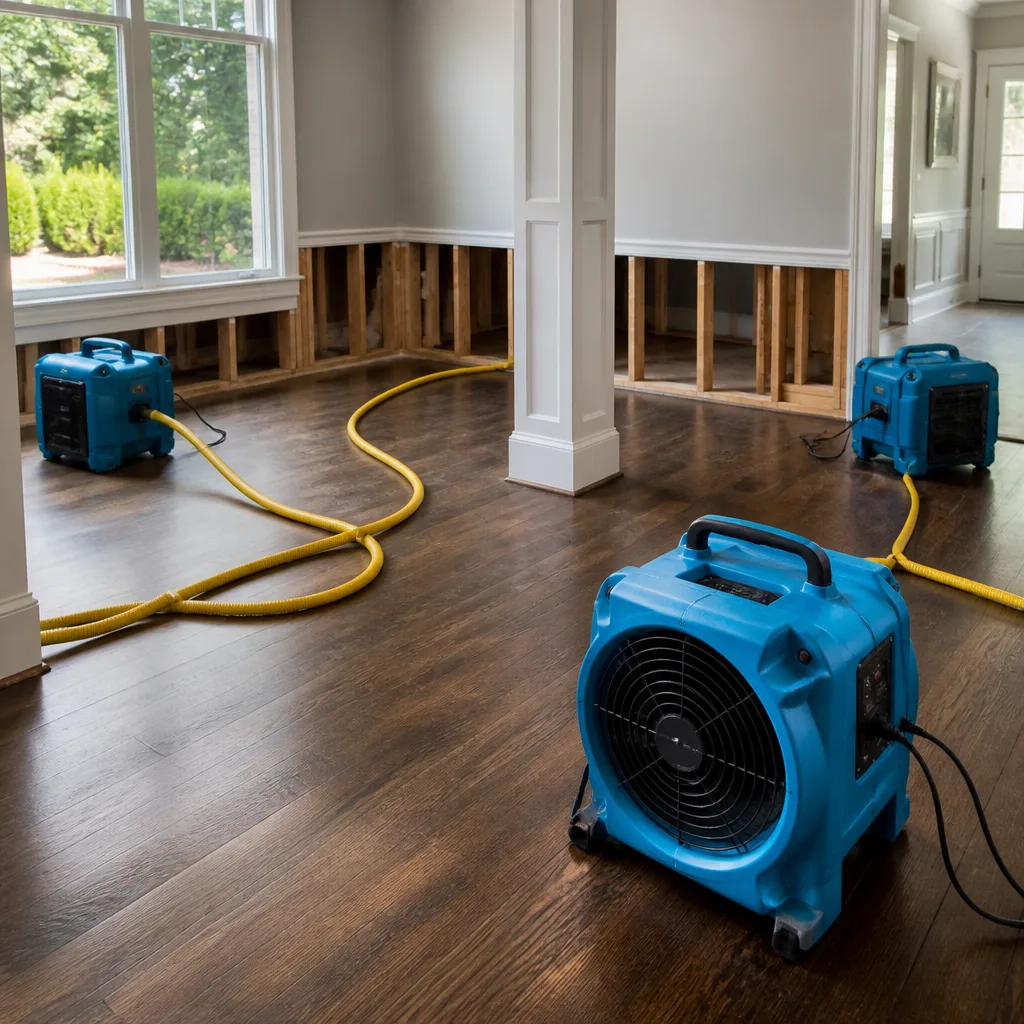 Water damage drying
 Fire & smoke cleanup
 Mold remediation
 Storm response
 Sewage cleanup
 Reconstruction
Free visual inspection and a written scope of work before any mitigation begins - photos, moisture readings, and drying logs go in your claim file
The scope we write is the scope we bill. Anything new gets shown to you, in writing, before we touch it.
Get your free estimateHow to Hire a Damage Restoration Contractor in Hempstead: A Step-by-Step Guide
Here is something most Hempstead homeowners don’t discover until it’s too late: New York State does not require a specific restoration license for water damage work. Any contractor holding a general home improvement license can legally respond to your flood, set up fans, and hand you a bill, whether or not they own a single moisture meter. By the end of this complete guide to damage restoration in Hempstead, you’ll know exactly which credentials to verify, which contract clauses to reject, and which questions separate a real restoration company from a contractor renting equipment and learning on your dime.
Quick Answer
To hire a damage restoration contractor in Hempstead, verify that the company holds a valid Nassau County home improvement license and employs IICRC-certified technicians, then confirm they provide a written price before any work begins, carry professional-grade drying equipment such as Dri-Eaz units, and offer a written workmanship guarantee longer than the standard one-year warranty. The vetting process takes about 20 minutes before an emergency, and it’s worth every minute when you’re standing in water.
Restoration work we handle
Table of Contents
- Step 1: Verify the Right New York and Nassau County Licenses
- Step 2: Read the Contract Before You Sign Anything
- Step 3: Evaluate the Written Estimate Line by Line
- Step 4: Ask About Drying Equipment and Moisture Mapping
- Step 5: Compare the 365-Day Promise Against a Standard Warranty
- Step 6: The Second-Opinion Checklist for Active Emergencies
- Step 7: Coordinate With Your Insurance Adjuster From Day One
- Step 8: Choose a Contractor Who Knows Hempstead Specifically
Step 1: Verify the Right New York and Nassau County Licenses
The first test of any restoration contractor is whether they hold the paperwork to legally work on your Hempstead home. Here’s what to ask for and how to check it in under five minutes.
Nassau County requires home improvement contractors to hold a license issued by the county’s Office of Consumer Affairs. That’s the baseline. But restoration work involves more than construction. When a crew cuts drywall, runs drying equipment, and applies antimicrobial agents, you want technicians who have passed the certification programs run by the Tidemark Water Damage Hempstead home standard: IICRC, RIA, or IFA credentials. These organizations set the training benchmarks for water, mold, and fire restoration, and they require continuing education to maintain certification.
- Go to the New York Department of State’s license verification portal and search the contractor’s business name. If they don’t appear, ask why.
- Check Nassau County’s Office of Consumer Affairs database for a home improvement license. This is separate from any state license.
- Ask the contractor for their IICRC certification number. You can verify it on the IICRC website’s “Find a Certified Pro” tool.
- Confirm that the technicians who will actually do the work, not just the owner, hold certifications.
We’ve had Hempstead homeowners show us competing estimates where the lead technician had no certification at all. One crew showed up with a pickup truck, two box fans from a big-box store, and a rental receipt for a dehumidifier. That’s not a restoration company. That’s a gamble with your home’s framing and your family’s air quality.
Step 2: Read the Contract Before You Sign Anything
A restoration contract should be straightforward. If it’s dense, confusing, or rushed at you while water is still pooling, that’s the first red flag.
We believe in explaining the price before the work. That’s the Cedarwell Care Promise standard, and it’s how every Tidemark job runs: a written price is delivered before any equipment gets unloaded from the truck. No exceptions. If a contractor won’t put a number in writing before starting, walk away, even if it means calling the next name on your list.
Here are five contract clauses that signal a predatory restoration operation:
- Assignment of benefits (AOB) language: This clause transfers your insurance claim rights to the contractor. It means the contractor can negotiate directly with your insurer, bill them directly, and in some cases sue them, all without your ongoing involvement. You lose control of the claim. Never sign an AOB clause without talking to your insurer first.
- Open-ended scope of work: Language that says the contractor can “perform all necessary work” without a defined scope or a dollar cap. That’s a blank check.
- No line-item detail: A contract that says “water damage restoration: $8,400” with no breakdown of labor, equipment, materials, and disposal is hiding something.
- Waiver of lien rights: Some contractors ask homeowners to sign away their right to file a lien dispute. Don’t do it.
- Mandatory arbitration clauses: These push any dispute into a private arbitration process with an arbitrator the contractor may help select. You want the option of small claims court if the job goes wrong.
Step 3: Evaluate the Written Estimate Line by Line
A legitimate restoration estimate for a Hempstead home should include specific line items. When you see these categories accounted for, you’re likely dealing with a professional. When they’re missing, ask why.
Here’s what should always be present:
- Water extraction: The number of extraction units and the hours billed. This is not a single “water removal” line. It should specify truck-mounted versus portable extraction.
- Drying equipment: The type, brand, and daily rate for each dehumidifier and air mover. Professional units from Dri-Eaz or Phoenix cost more than rental-store equipment because they move more air and remove more moisture per day.
- Moisture mapping and monitoring: Daily moisture readings with documentation. A contractor who doesn’t map moisture before and during drying is guessing.
- Antimicrobial application: The specific product name and coverage area. You should know exactly what’s being applied to your walls and floors, especially with children and pets in the house.
- Demolition and disposal: The square footage of drywall and flooring removed, and the disposal method. Hempstead has specific rules about construction debris.
- Containment: Plastic sheeting, negative air pressure, and sealing of affected areas to prevent dust and spores from traveling through the house.
Suspiciously absent items are just as telling. If an estimate does not include a line for moisture mapping, the contractor probably isn’t doing it. If there’s no line for daily monitoring visits, they may be setting up equipment and not returning until the final day. If there’s no containment line for a mold or sewage job, run.
The Cedarwell written-price-first standard means you see every one of these lines before anyone touches a wall. And the price on the final invoice matches the price you approved. That’s not a feature. That’s the baseline for honest work in Hempstead.
Step 4: Ask About Drying Equipment and Moisture Mapping
The most revealing question you can ask a restoration contractor is this: “What brand of dehumidifier are you bringing, and how many pints per day does it pull?”
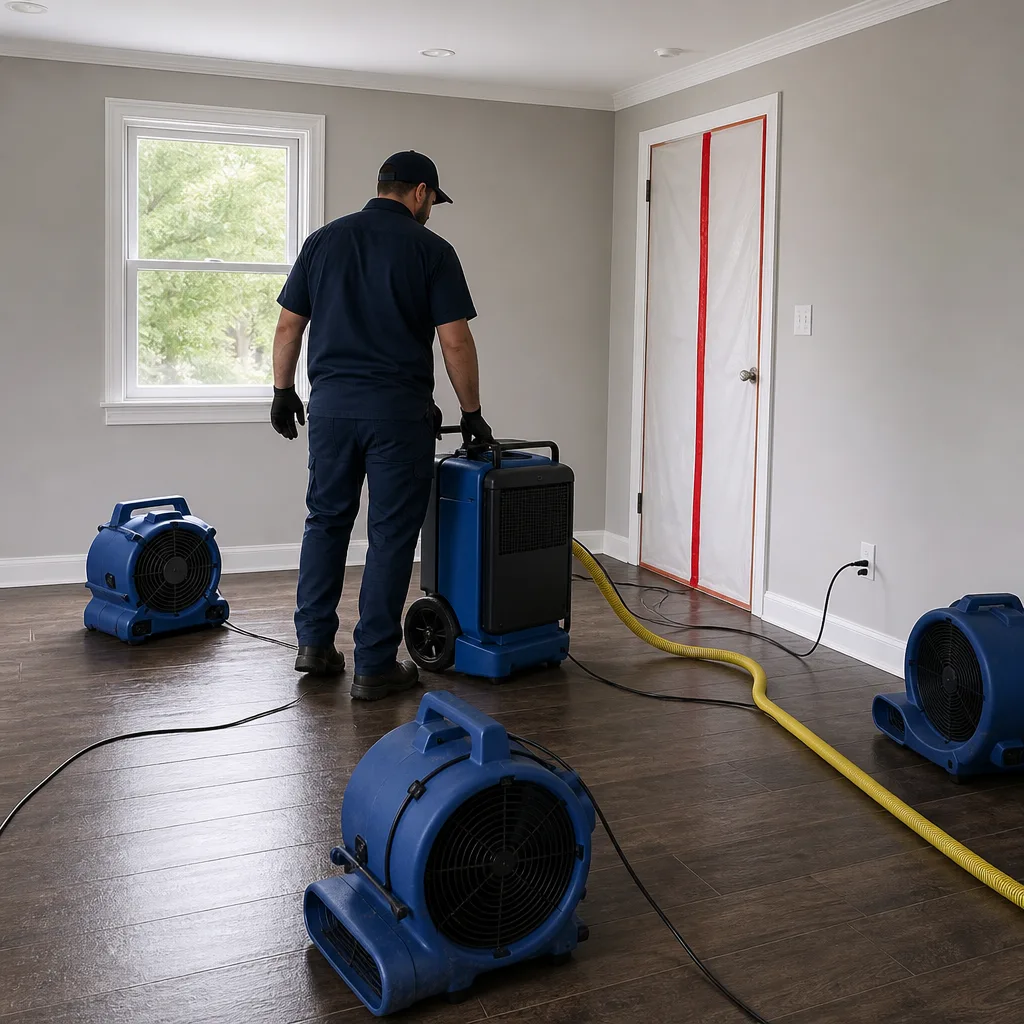
Here’s why it matters. Industrial drying is a physics problem. You need to remove moisture faster than the surrounding materials release it. Professional low-grain refrigerant dehumidifiers from Dri-Eaz or Phoenix pull between 70 and 130 pints per day depending on the model. A rental-store unit might manage 30. A contractor who owns professional-grade equipment pays for it once and uses it for years. A contractor renting inferior units is billing you a daily rate that exceeds their rental cost, and the job takes longer, which means more billing days.
In our experience, a Hempstead home with a Category 1 clean water loss from a supply line break typically dries in three to five days with professional equipment. The same job with underpowered rental units can drag on for two weeks, and the homeowner pays more in the end.
Questions to ask about equipment:
- What brand of dehumidifier will you use, and what is its AHAM-rated water removal capacity?
- How many air movers will you place, and how did you calculate that number?
- Do you use moisture meters to map the affected area, and will you provide daily readings?
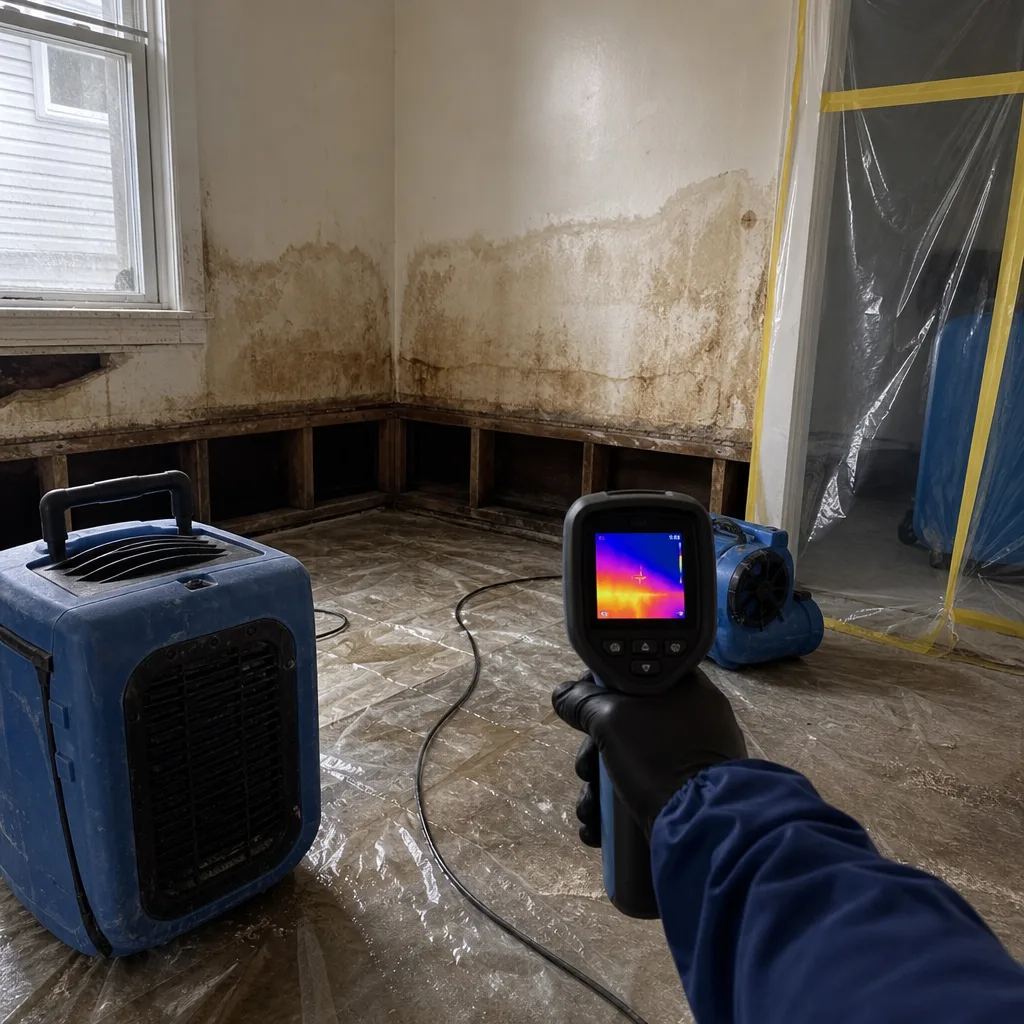
- Do you use thermal imaging or infrared cameras to find hidden water pockets behind walls and under floors?
- Do you own the equipment or rent it? If you rent, from where?
The tide mark concept matters here. A tide mark is the line water leaves on a wall, and it’s the first thing our technicians look for on every job. Finding the tide mark tells us exactly how far water traveled. Drying past it means running equipment until the moisture levels read dry, not just until the visible water is gone. Many contractors stop when the surface looks dry. That’s how mold grows in a Hempstead basement six weeks later.
Step 5: Compare the 365-Day Promise Against a Standard Warranty
Every restoration contractor offers a warranty. Most are one-year workmanship guarantees that cover the specific repairs made. That’s standard, and there’s nothing wrong with it.
But a 365-Day Done Right Promise is different, and it’s worth understanding the distinction before you sign. The standard one-year warranty covers defects in materials and workmanship. If the drywall tape cracks, the contractor comes back and fixes it. That’s it.
A Done Right Promise covers the outcome. It says: if the restoration is not done right, we make it right. That means if moisture wicks back through the slab six months later, or if a mold odor returns, or if the paint peels because the substrate wasn’t fully dry, the contractor returns and does the job correctly at no additional cost.
Here’s the question that separates a marketing slogan from a real guarantee: “What does ‘done right’ mean in writing?” Ask the contractor to define it. Does it cover recurrence of the same issue? Does it cover the discovery that they missed a section of water that was drying behind a wall? Does it cover the cost of redoing the entire job or just the specific patch? Get the answer in writing.
When we made the 365-Day Done Right Promise part of the Tidemark standard, we wrote it down. It applies to every water damage, mold, and fire restoration job we complete in Hempstead, and it’s not tied to a calendar date that expires while the house is still settling. If the restoration is not done right, we make it right. That’s the promise, and it’s in writing before the first fan gets plugged in.
Step 6: The Second-Opinion Checklist for Active Emergencies
Here’s the reality of water damage in Hempstead: it doesn’t wait for you to complete a water damage restoration maintenance checklist or 20-minute vetting process. If a supply line bursts at 2 a.m. or a sewage backup floods your finished basement, you need to act. That’s when a second-opinion checklist becomes your lifeline.
When someone is standing in your living room handing you a contract, run through this list:
- Ask for the license number. Write it down. Tell them you’re verifying it with Nassau County before signing. If they hesitate, that’s your answer.
- Ask for the written price. Not an estimate range, not “we’ll work with your insurance.” A written number. If they can’t produce one, ask them to wait in the truck.
- Ask what equipment they’ll bring tomorrow. If the answer is “fans and dehumidifiers,” ask for the brand names. If they can’t tell you, they’re probably renting whatever the supply house has available.
- Ask about containment. If mold or sewage is involved, anyone worth hiring will specify containment measures. No containment plan, no signature.
- Ask about the warranty in writing. “What happens if I call you 11 months from now and the same spot is wet?” Get the answer in the contract.
- Call your insurance company’s emergency line. Many policies have preferred vendors who meet stricter requirements. It also starts the adjuster process immediately, which protects you.
This checklist takes five minutes. It’s the difference between hiring a restoration professional and hiring someone who learned to set up a fan last week.
Step 7: Coordinate With Your Insurance Adjuster From Day One
Insurance is almost always in the room when Hempstead homeowners deal with water, mold, or fire damage, even if no one says it out loud. How you handle the adjuster relationship on day one shapes how the entire claim goes.
Here’s what we’ve seen work best: photograph everything before anything moves. Before the contractor touches a piece of wet drywall, before a fan gets placed, before the carpet gets cut. Use your phone and take more photos than you think you need. The adjuster will thank you, and more importantly, you’ll have documentation if the scope of damage gets disputed later.
A restoration contractor who understands insurance will offer to coordinate directly with your adjuster. That means sharing moisture readings, equipment logs, and daily monitoring reports. It means providing photo documentation of the damage before demo begins and after the job is complete. At Tidemark, we take a photo of the clean-up and share it before the crew leaves, so the homeowner sees exactly what was done and how it was left. That photo has settled more than one insurance dispute.
Be cautious about contractors who want to negotiate directly with your insurer without keeping you informed. The assignment of benefits clause mentioned earlier is the extreme version of this. Even short of an AOB, a contractor who says “don’t worry about the insurance, we’ll handle everything” is asking you to surrender the one thing that protects you: awareness.
Step 8: Choose a Contractor Who Knows Hempstead Specifically
Seasonal damage restoration care for Hempstead and local experience matter because restoration work here comes with specific challenges that a contractor from the next county over may not understand. The village’s housing stock includes a lot of homes built before 1960, which means plaster walls, old framing, and basements that were never designed to dry quickly. A contractor who has worked on older homes in Hempstead knows that plaster holds water differently than drywall, and that the drying plan has to account for that.
Climate matters too. Hempstead gets humid summers that slow evaporation, and a drying plan that works in January with the heat running won’t work in August. Local contractors know the seasonal rhythm. They know that a basement flood in March often connects to groundwater pressure from snowmelt, which changes the mitigation strategy.
Nassau County also has specific rules about contractor licensing, and Hempstead has its own requirements for permits on structural repairs. A local contractor files the right paperwork the first time, not the third time after the building inspector flags the job.
And there’s a simpler reason to choose local: response time. When you call about water in your Hempstead living room, a contractor based 20 minutes away gets there faster than one driving in from Suffolk County. Live phone support matters too. Our phones at Water Damage Restoration in Hempstead are answered by a real person, 24 hours a day, 7 days a week. Not a voicemail, not a callback queue. Because water damage at 11 p.m. on a Sunday is still water damage, and it doesn’t wait for Monday morning.
Common Mistakes to Avoid
- Hiring without a written price. Any contractor who starts work before putting a number in writing is setting you up for an invoice you can’t contest. The Cedarwell Care Promise standard is a written price before any work starts, always.
- Signing an assignment of benefits clause. This gives the contractor control of your insurance claim. You lose the ability to negotiate, and you may not even know what the contractor bills your insurer until it’s done.
- Assuming all dehumidifiers are the same. A rental-store unit pulling 30 pints a day is not the same as a professional Dri-Eaz or Phoenix unit pulling 130. The difference is another week of drying time and a much bigger bill.
- Skipping moisture mapping. If the contractor doesn’t document moisture levels before, during, and after drying, they can’t prove the job is actually finished. You’re accepting their word, and their word doesn’t hold up when mold appears in month eight.
- Choosing speed over credentials. The fastest response isn’t always the most qualified. A licensed, certified contractor who arrives an hour later is worth more than a pickup truck with rented fans that arrived first.
- Not asking about pet-safe products. Where there’s a choice, a good contractor uses drying agents and antimicrobials that are safe for children and pets. It’s a specific question with a specific answer, and it matters in homes with crawling toddlers and dogs who lick the floor.
- Accepting a one-year warranty without reading the fine print. Ask what “covered” means. Is it material defects only? What about recurrence of the same issue? A 365-Day Done Right Promise is only as good as its written definition.
See the difference
 Before
 After
After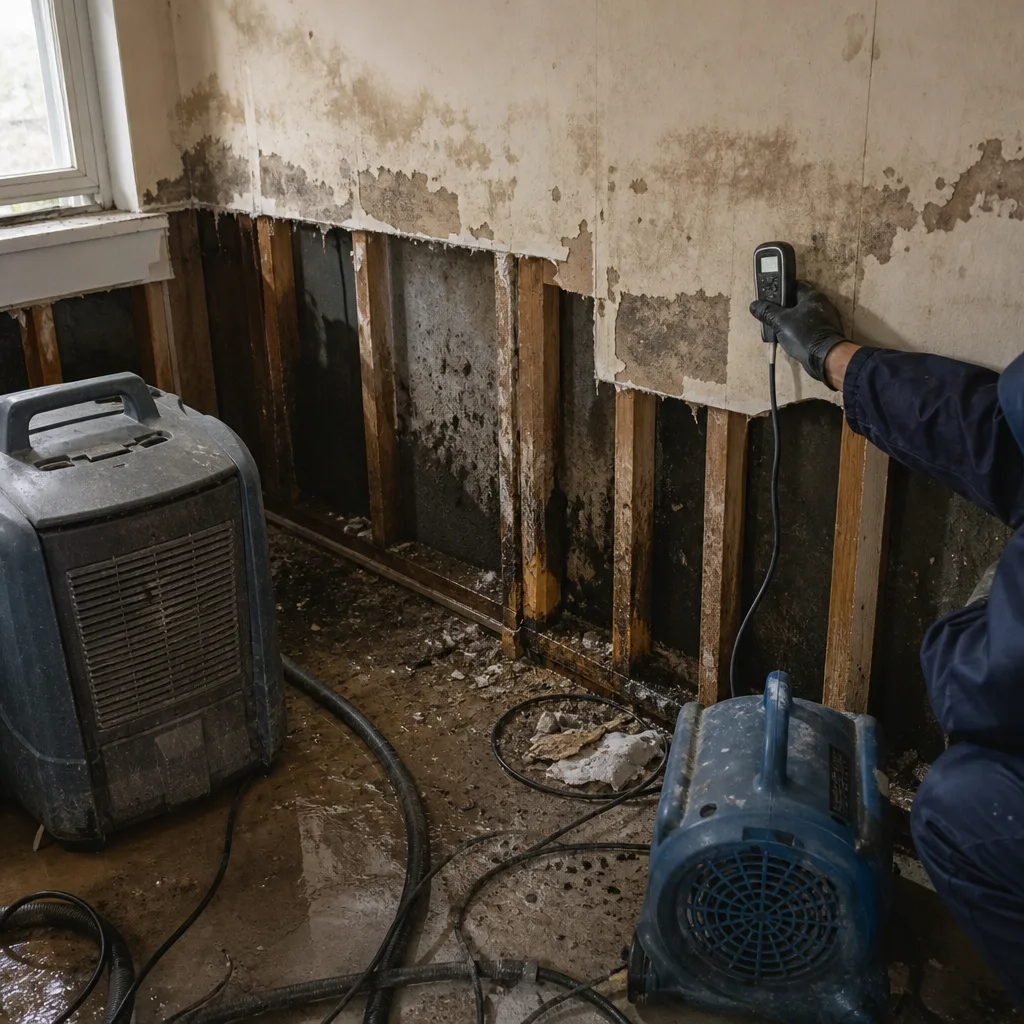 Before
 After
After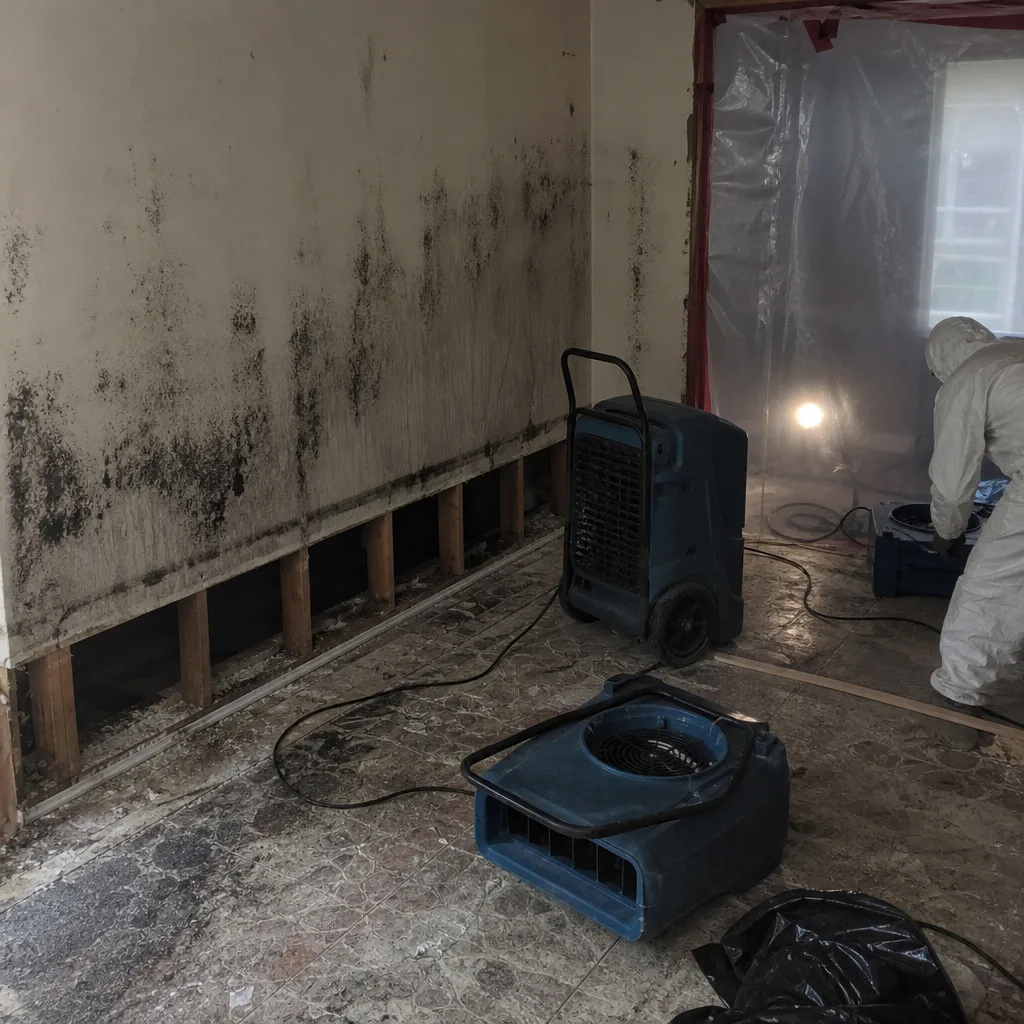 Before
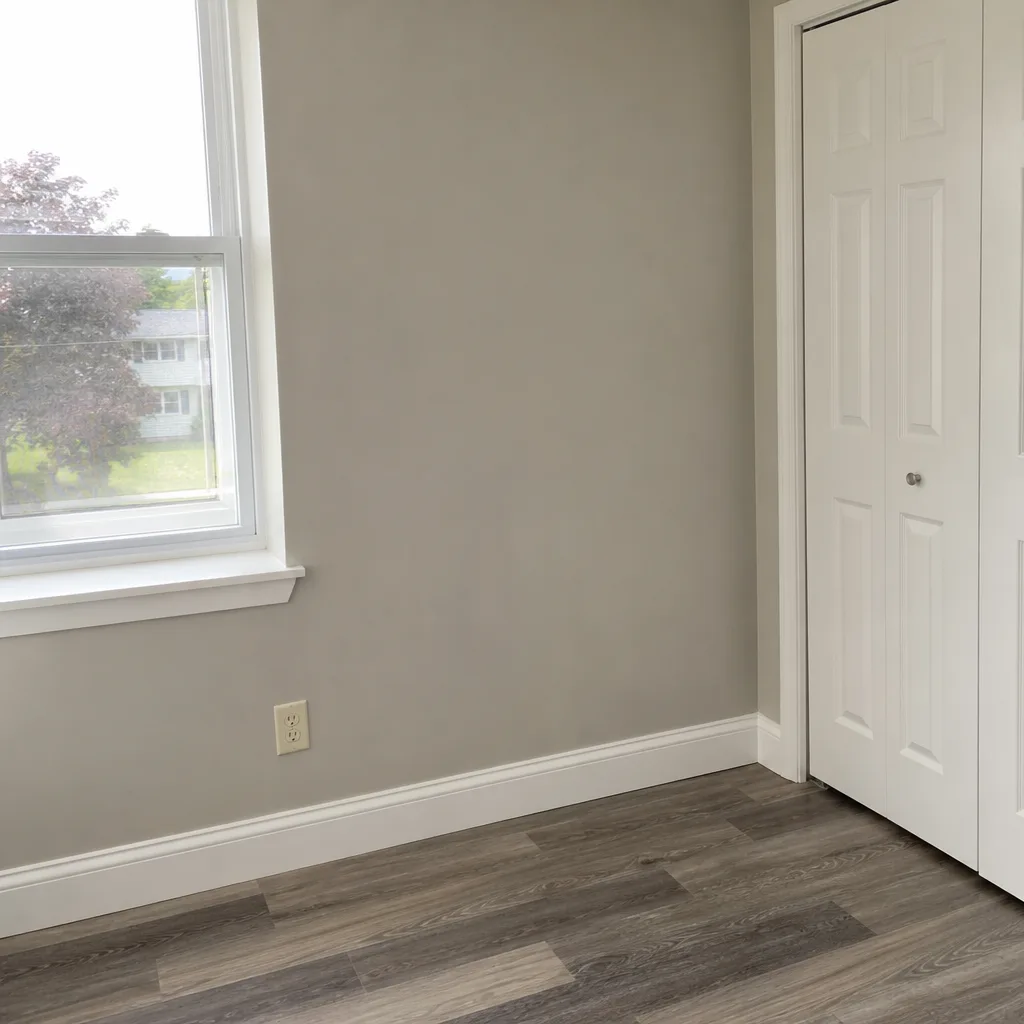 After
AfterWhen to Call a Professional
Call a professional restoration contractor immediately if water has penetrated walls, flooring, or the subfloor and you can’t dry it completely within 48 hours. Call if you see or smell mold, if sewage is involved, if water reached electrical outlets or your breaker panel, or if the affected area is larger than a single room. Call if anyone in the house has respiratory issues, a compromised immune system, or if children and pets spend time in the affected space. Faster is always better, but a credentialed contractor who arrives slightly later beats an uncertified one who arrives first. Mold Remediation in Hempstead requires professional containment and testing, not DIY bleach and a fan. Tidemark Water Damage Hempstead offers free estimates in Hempstead, call (516) 559-4877.
Frequently Asked Questions
Water damage restoration in Hempstead typically ranges from $1,800 to $6,500 for a single-room clean water loss, with costs rising to $15,000 or more for multi-room floods, sewage backups, or hidden moisture that requires extensive demolition and structural drying. The exact number depends on the affected square footage, the water category, the equipment needed, and how quickly mitigation begins. You should receive a written price with line-item detail before any work starts.
A damage restoration contractor working in Hempstead should hold a Nassau County home improvement license issued by the county’s Office of Consumer Affairs, and their technicians should carry IICRC, RIA, or IFA certifications for water, mold, and fire restoration work. New York State does not issue a dedicated restoration license, so these certifications are the key differentiator. Ask for the license number and verify it on the county’s website.
Most standard homeowner policies in Hempstead cover sudden and accidental water damage, such as a burst supply line or an overflowing appliance, but not gradual leaks, groundwater seepage, or flood damage from outside water. You need a separate flood insurance policy for that. Document everything with photos before demo starts, and coordinate with your adjuster from day one. A contractor who provides daily moisture readings and photo documentation will make the claim process smoother.
A locally based restoration contractor should be able to arrive at your Hempstead home within 60 to 90 minutes of your call. This is one of the strongest arguments for choosing a contractor with a local presence rather than a national franchise that dispatches crews from farther away. Phones should be answered by a live person 24/7, not a voicemail system. Call to confirm response time before you commit.
If mold covers more than 10 square feet, if it has penetrated porous materials like drywall and carpet, or if anyone in the house has respiratory symptoms that started around the time the mold appeared, you need professional remediation with full containment. Surface cleaning is appropriate only for minor mold on non-porous surfaces like tile or glass. A certified mold remediation contractor can test and tell you which situation you have. Call (516) 559-4877 to schedule an inspection.
A 365-Day Done Right Promise means that if the restoration is not done right, the contractor returns and makes it right at no additional cost, covering recurrence of the same issue for a full year after the job is completed. This is different from a standard one-year workmanship warranty, which typically covers only material and workmanship defects on the specific repairs. Get the definition in writing before you sign, and ask specifically whether recurrence of moisture or mold is covered.
You can attempt DIY drying only for a very small clean water spill that you catch immediately, such as a glass of water knocked onto a tile floor. Any water that has soaked into drywall, carpet, hardwood, or the subfloor requires professional extraction and industrial drying equipment to prevent mold growth behind walls and under floors. Hempstead’s humid summers make air-drying almost impossible. If in doubt, call a professional for an assessment.
The Bottom Line
Hiring a damage restoration contractor in Hempstead is a decision you should make before you need one. The 20 minutes you spend now verifying licenses, understanding contracts, and compiling a second-opinion checklist will pay off the moment water starts moving across your floor. Demand a written price before work starts, insist on IICRC-certified technicians with professional Dri-Eaz or Phoenix equipment, get the warranty definition in writing, and choose a contractor who knows Hempstead homes. Fire Damage Restoration in Hempstead and water and mold restoration all benefit from the same careful selection process. The best contractor is the one you’ve already vetted when the phone rings.
Written by Rick Sumner, Owner at Tidemark Water Damage Hempstead, serving Hempstead since 2006. Explore more guides & resources from our team.