
Last updated October 16, 2026
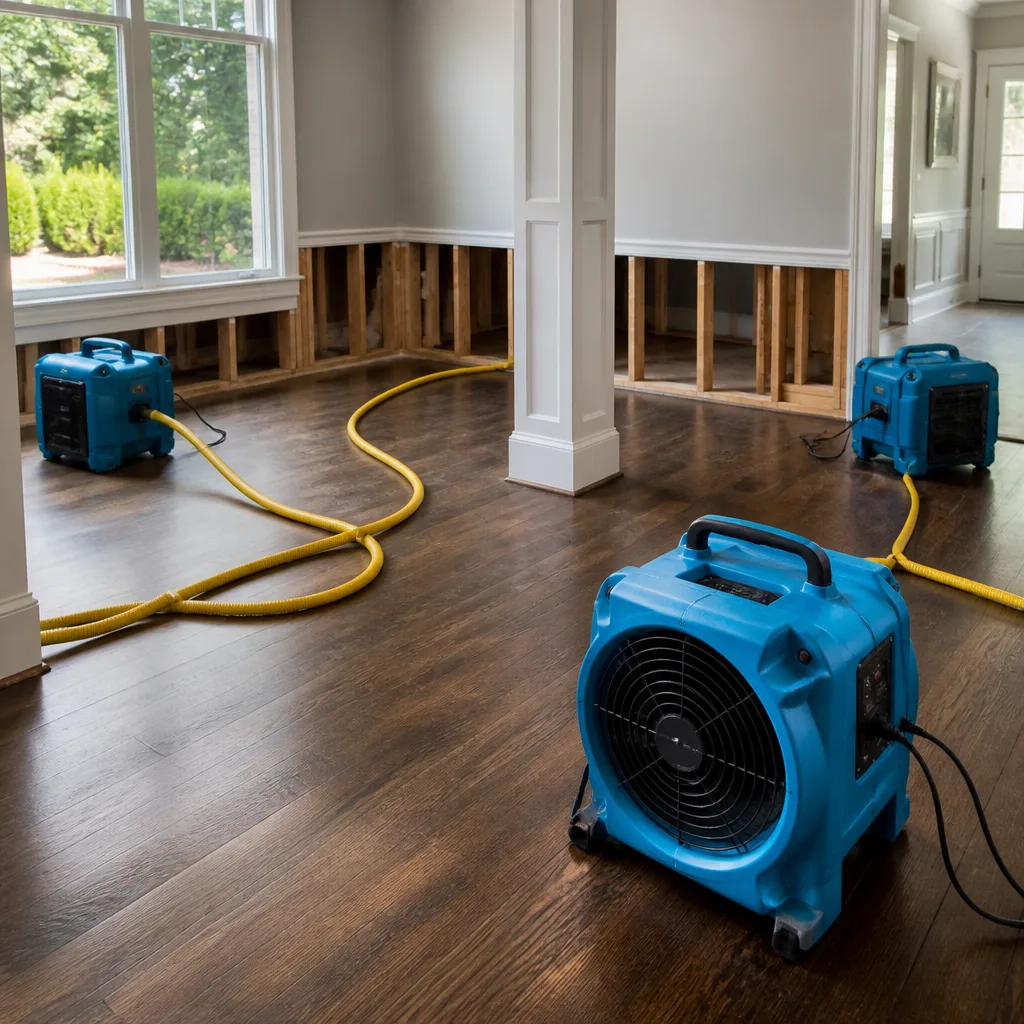 Water damage drying
 Fire & smoke cleanup
 Mold remediation
 Storm response
 Sewage cleanup
 Reconstruction
Free visual inspection and a written scope of work before any mitigation begins - photos, moisture readings, and drying logs go in your claim file
The scope we write is the scope we bill. Anything new gets shown to you, in writing, before we touch it.
Get your free estimateThe Complete Guide to Damage Restoration in Hempstead
Nearly 60% of Hempstead’s residential housing stock was built before 1970. That matters more than most homeowners realize, because pre-1970 Long Island construction typically means balloon-frame walls and cast-iron drain stacks, and both features let water travel three floors in under an hour without leaving a visible trace on any of them. By the time a stain shows up on the dining room ceiling, the water has already moved through wall cavities, soaked insulation, and settled into places no one thinks to look. This guide maps how water, fire, and mold each move through Hempstead homes, so when something goes wrong you’ll know exactly what is being restored, what comes next, and what questions to ask before anyone picks up a tool.
Restoration work we handle
Quick Answer
Damage restoration in Hempstead, NY is the full process of returning a home to its pre-loss condition after water intrusion, fire, or mold growth. It always begins with mitigation (stopping the active damage), moves through remediation or structural drying where needed, and ends with restoration (rebuilding and refinishing). The single most important step for any Hempstead homeowner is getting a written scope and price before work starts-our Damage Restoration Cost Breakdown: The Hempstead Homeowner’s Reference for 2026 explains why-because the legal distinction between these three phases determines what your insurance carrier will and won’t pay for.
Table of Contents
- Understanding the Three Phases: Mitigation, Remediation, and Restoration
- How Hempstead’s Older Homes Change Everything
- Water Damage Restoration in Hempstead: What Actually Happens
- Mold Remediation in Hempstead: Where It Hides and How We Remove It
- Fire Damage Restoration in Hempstead: Beyond the Visible Burn
- The 72-Hour Timeline: What Happens Inside Your Walls
- Nassau County Flood Water and Category 3 Protocols
- Common Mistakes to Avoid
- When to Call a Professional
- Frequently Asked Questions
- The Bottom Line
Understanding the Three Phases: Mitigation, Remediation, and Restoration
In New York, these three terms have specific legal and insurance meanings, and using them interchangeably can leave you underinsured or stuck in a dispute with an adjuster. We walk every Hempstead homeowner through this distinction on the first call, because it shapes what gets approved and what you pay out of pocket.
Mitigation is the emergency response. It’s what happens in the first hours and days after water enters your home: extracting standing water, removing saturated drywall and carpet, setting up drying equipment, and boarding up openings after a fire. Mitigation stops the damage from compounding. In insurance terms, it’s almost always covered as part of your policy’s “reasonable and necessary” protection language, and it’s also where pre-1970 Hempstead homes cause the biggest surprises, because the water source is rarely where the water ends up.
Remediation is the removal of a contaminant or hazardous condition. For mold, that means containing the affected area, physically removing colonized materials, cleaning surfaces with EPA-registered antimicrobials applied to IICRC standards, and verifying the result with moisture readings and air sampling. For water that came in contact with sewage or flood water, remediation includes disinfecting every surface the water touched, because the contamination classification drives the protocol.
Restoration is the rebuild. It’s replacing the drywall, refinishing the floors, repainting, reinstalling cabinetry, and returning your home to its pre-loss condition. This phase is scoped, scheduled, and priced in writing, like a remodel. No one dispatches a same-day crew for restoration. It’s planned, permitted where Nassau County requires it (Damage Restoration Permits, Codes & Inspections in NY: What You Need to Know), and executed over days or weeks.
Why does the distinction matter? A claim that says “water mitigation” covers the emergency extraction and drying. A claim that says “remediation” covers the contaminant removal. But if the words are missing from the adjuster’s notes, the rebuild could land on you. The written scope before work starts is your protection against this exact problem. It names the phase, the method, and the price, so there’s no ambiguity about what was done and why.
How Hempstead’s Older Homes Change Everything
Hempstead’s housing mix includes colonial-era farmhouses, 1920s bungalows, post-war Cape Cods, and mid-century split-levels, but the common thread through the majority of the village’s pre-1970 stock is balloon-frame construction. In a balloon-frame wall, the stud cavities run uninterrupted from the foundation to the attic. There is no horizontal fire blocking between floors. That single detail changes how water and fire both behave.
When a supply line lets go on the second floor of a balloon-frame Hempstead home, the water doesn’t pool on the floor and stop. It finds the wall cavity, drops three floors, and soaks the bottom plate inside the foundation sill before anyone notices a drip. We’ve been called to homes where a toilet supply line on the second floor quietly ran for six hours and saturated the basement ceiling joists three floors down, all while the only visible sign was a damp baseboard in the living room. The tide mark is what tells the story. A tide mark is the line water leaves on a wall, and it is the first thing our technicians look for on every job.
Fire behaves the same way in these walls. In a balloon-frame home, fire in a lower wall cavity can travel vertically to the attic in minutes. That’s why fire damage restoration in Hempstead almost always involves checking the entire stud bay from basement to attic, not just the room where the fire started. It’s also why older homes sometimes need more demolition after a small kitchen fire than a newer home would: the smoke and soot chase the same open channels the water uses.
The other pre-1970 variable is cast-iron drain stacks. These pipes have a 50 to 80 year service life, and many Hempstead homes are at or beyond that window now. When a cast-iron stack fails, it’s rarely a dramatic burst. It’s a slow seep behind a wall that grows mold for months before the drywall shows a stain. That’s why we recommend a moisture check-and a review of our Damage Restoration Warning Signs: A Hempstead Homeowner’s Reference Guide-on any Hempstead home built before 1970 that develops a musty smell with no obvious water source.
For a closer look at how water moves through these older structures, our Water Damage Restoration in Hempstead page walks through the full inspection and drying process step by step.
Water Damage Restoration in Hempstead: What Actually Happens
Water damage restoration is not “get the water out and turn on some fans.” It’s a measured process that maps where the water traveled, removes what can’t be dried, and verifies, via moisture readings, that the structure is actually dry before any rebuild begins. In Hempstead’s older homes, that mapping step is the part that separates a real restoration from a surface fix.
Here’s the sequence our IICRC-credentialed technicians follow on a typical water damage job in a Hempstead home, and what you should expect at each step:
- Source shutdown and safety check. If a pipe is still leaking, the water gets shut off at the nearest valve or the main. Electrical panels near water are checked before anything else happens. If there’s any question about a live circuit and standing water, we wait for a licensed electrician before we touch the water.
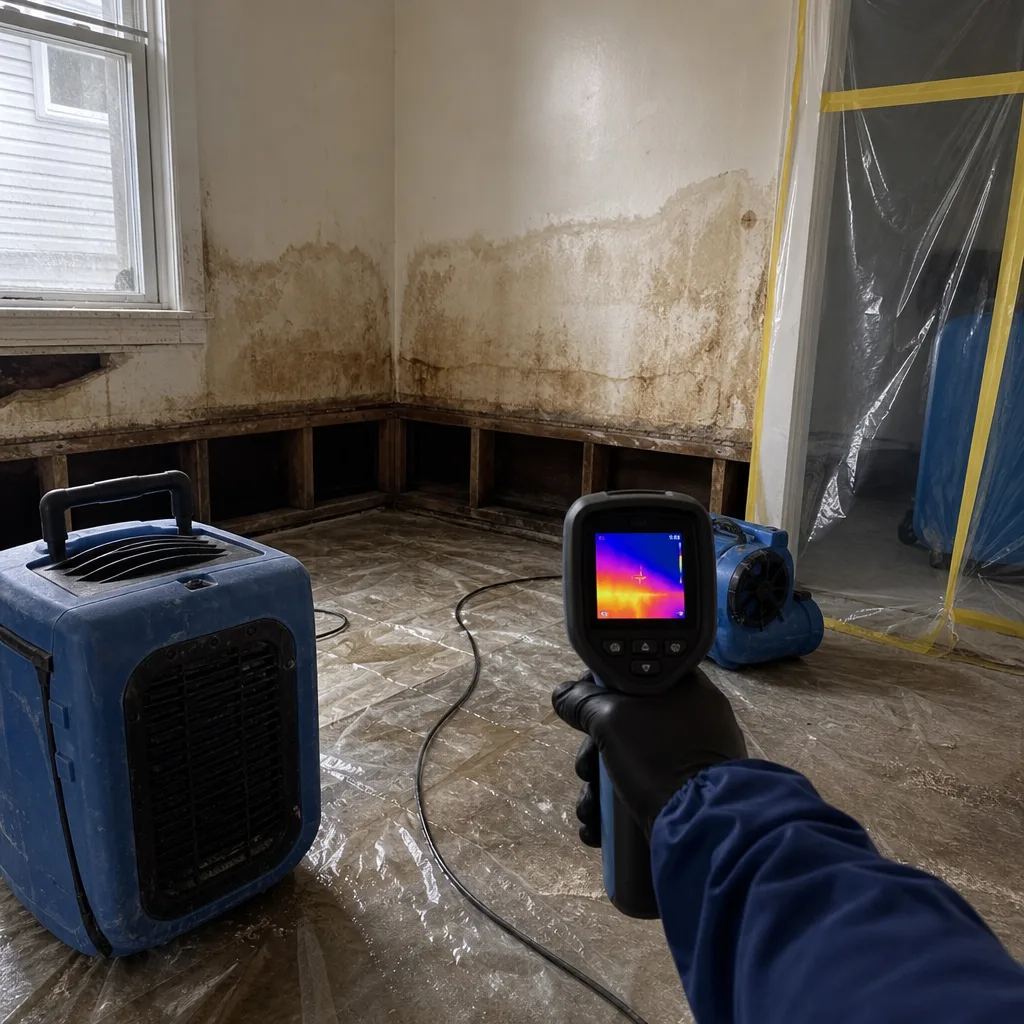
- Moisture mapping and tide mark identification. We trace the water’s path using moisture meters, thermal imaging, and visual inspection of the tide mark, which is the line water leaves on a wall. In a balloon-frame Hempstead home, this step routinely finds water two rooms away from the visible damage.
- Water extraction. Professional extraction with truck-mounted or portable units removes standing water far faster than wet vacs. The goal is to remove as much free water as possible before drying equipment is set, because water removed is water that doesn’t have to evaporate through your framing.
- Removal of unsalvageable materials. Saturated drywall below the tide mark, wet carpet and pad, damaged underlayment, and wet insulation get cut out and bagged. In our experience, Hempstead homeowners are often surprised at how much comes out, but the alternative, trying to save soggy gypsum, is a mold problem waiting for the right temperature.
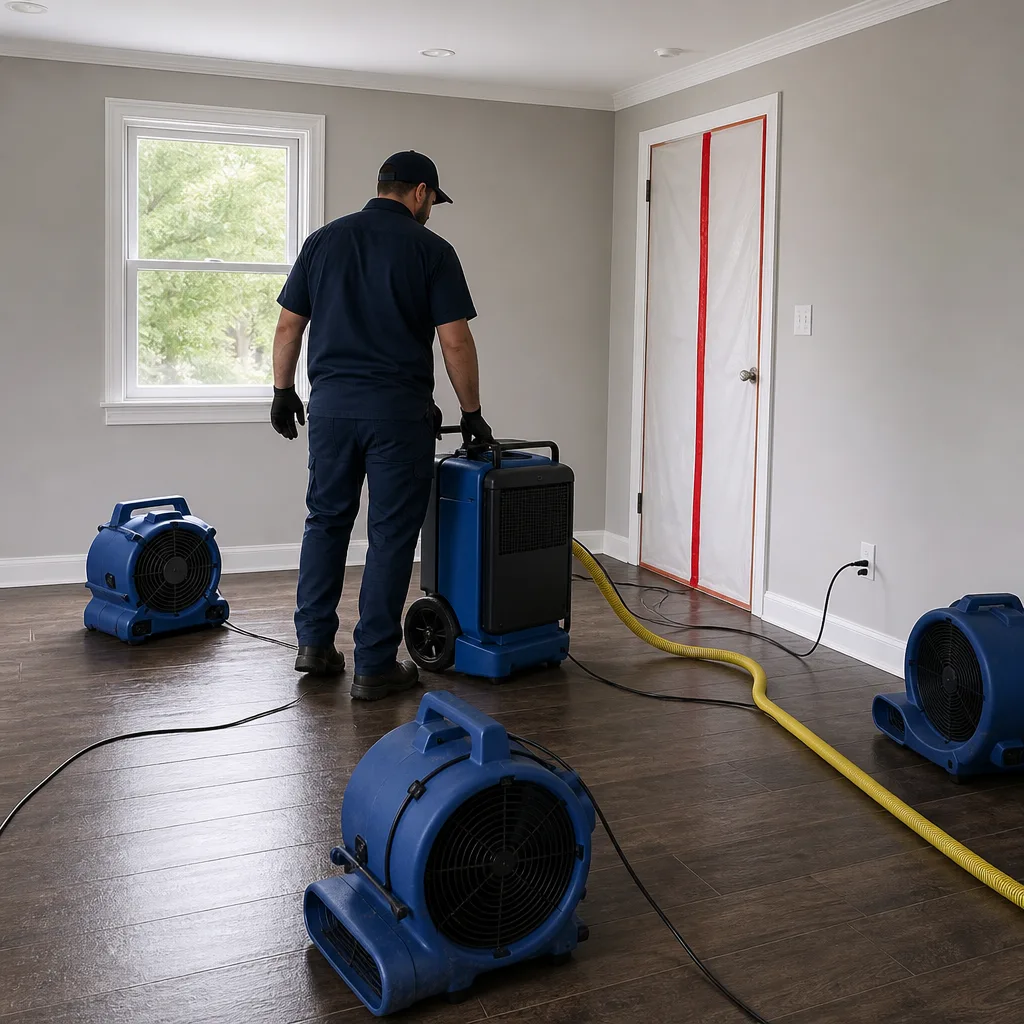
- Structural drying. We set professional-grade drying equipment from manufacturers like Dri-Eaz, Phoenix, B-Air, and XPOWER to dry the framing, subfloor, and remaining cavities. This runs for 3 to 5 days in most cases, with moisture readings taken daily to track drying progress against IICRC standards.
- Verification and documentation. When the moisture readings confirm the structure is dry, we document everything. A photo of the clean-up is taken and shared before the crew leaves, so you see exactly what was done and how it was left.
The drying phase is where “dry past the tide mark” matters. A floor can feel dry to the touch and still hold enough moisture inside the subfloor to support mold growth. We dry until the moisture content of the framing and subfloor reads within IICRC standards, not until the air feels dry.
Mold Remediation in Hempstead: Where It Hides and How We Remove It
Mold in a Hempstead home is almost always a moisture problem first and a mold problem second. The mold is the symptom. The water source is the disease. Until the source is found and fixed, no amount of bleach or scrubbing will keep the mold from returning. That’s the first thing we explain on every Mold Remediation in Hempstead job, because homeowners deserve to understand the actual problem before they pay to solve it.
In Hempstead’s older housing stock, the most common mold hideouts are the same hidden channels that carry water: balloon-frame wall cavities, the bottom plates above foundation sills, the back of baseboards in kitchens and bathrooms, and the area around cast-iron drain stacks behind walls. We’ve also found mold growing inside closed-off fireplace chimneys that were bricked over in the 1980s, and in the joist bays under second-floor bathrooms where vinyl flooring was installed over originally wood-framed floors with no water barrier.
A proper mold remediation in a Hempstead home follows a defined protocol, and here’s where the written-price-first standard matters most. Because mold work has a reputation in this trade for ballooning scopes and surprise invoices, we set the scope before we set up containment:
- Source identification. We find where the water is coming from and fix it or flag it for a plumber. This is step one, always.
- Containment. The affected area is sealed with plastic sheeting and negative air pressure so mold spores don’t spread to clean rooms while we work.
- Physical removal. Mold-colonized drywall, insulation, and porous materials are removed and bagged inside the containment area. Porous materials that are colonized can’t be “cleaned” back to a safe state; they have to come out.
- Cleaning and treatment. Remaining surfaces are cleaned with EPA-registered antimicrobial products applied to the standard the job requires, and HEPA vacuuming removes settled spores.
- Verification. We take moisture readings and, where the scope calls for it, air samples to confirm the space is ready for rebuild.
When there’s a choice of products, we use pet-safe formulas, and we run drying and air-scrubbing equipment at lower-decibel settings during school hours and nap time. We know a Hempstead family’s life doesn’t pause because there’s a mold problem in the basement.
For a deeper look at how mold moves through older Long Island structures and what remediation actually involves, see the full guide on Mold Remediation in Hempstead.
Fire Damage Restoration in Hempstead: Beyond the Visible Burn
A kitchen fire that gets put out in ninety seconds still fills every room with smoke. The soot travels further than the flames ever could, and in a balloon-frame Hempstead home, it follows the same open wall cavities that water does. That’s why fire restoration starts with a full structural assessment, not just a look at the burned wall.
Fire damage in a home involves three distinct contaminants, and each requires a different response. The visible char and burned materials are the obvious part. The smoke residue is a fine particulate that gets into every porous surface, clothes, upholstery, curtains, even the insulation in the attic. And the water damage from firefighting is the part most homeowners don’t expect until they see the ceiling sagging. We handle all three, and our Fire Damage Restoration in Hempstead page covers the full sequence.
The restoration process typically follows this arc:
- Board-up and emergency stabilization. Broken windows, burned roof sections, and compromised doors get secured so the home is weather-tight and safe. In Hempstead’s older homes, this often means checking that the fire didn’t compromise joist ends or sill plates before anyone walks on a floor.
- Water extraction from firefighting. Hoses put hundreds of gallons into a home. That water is extracted and the structure begins drying even while soot removal starts, because wet soot becomes acidic and corrodes metal surfaces quickly.
- Soot and smoke removal. Surface soot is cleaned with specialized techniques appropriate to the material, and thermal fogging or ozone treatment neutralizes smoke odor that has penetrated porous surfaces. In a balloon-frame home, this means treating the entire stud cavity, not just the finished surfaces.
- Content cleaning and pack-out where needed. Salvageable items are cleaned on site or packed out to a cleaning facility. Unsafe or unsalvageable materials are removed and documented for insurance.
- Reconstruction. This is the restoration phase: framing, drywall, finish work, paint, and flooring. It’s scoped in writing and scheduled, not rushed.
Fire restoration is also the phase where direct insurance coordination matters most. We photograph everything, document the written scope, and work directly with your adjuster so the claim reflects the actual condition of the home, not a generic estimate from a desk in another state.
The 72-Hour Timeline: What Happens Inside Your Walls
Families want to know what is happening inside their walls even when no one is standing in the living room with a moisture meter. Here’s the phase-by-phase picture for a typical water damage event in a Hempstead home, from the first call through the end of active drying.
Hours 1-6: Emergency Response and Extraction
The first call reaches a live person, 24/7. Not a voicemail, not a callback queue, because water damage does not wait for business hours. A crew arrives, shoe covers go on at the door, drop cloths cover the floor before the first piece of equipment comes in. The source is shut down, standing water is extracted, and the affected area is mapped. You receive a written scope and price before any further work proceeds.
Hours 6-24: Demolition and Equipment Setup
Saturated materials are removed, the affected wall cavities are opened where needed, and drying equipment is placed. In a balloon-frame Hempstead home, this is when the real extent of the damage becomes clear, because the moisture mapping now shows the water’s full path. Air movers and dehumidifiers start running. You’ll hear them: a steady background hum. We run lower-decibel settings during quiet hours.
Days 2-5: Active Drying
The equipment runs continuously. Moisture readings are taken daily. You might not see a crew member every day during this phase, but the equipment is working, and the drying progress is documented each visit. If the readings aren’t tracking as expected, we adjust equipment placement and let you know.
Days 4-14: Verification, Cleaning, and Scope for Rebuild
When the structure reads dry to IICRC standards, the equipment comes out. The affected area is cleaned. A photo of the clean-up is taken and shared before the crew leaves. If restoration (rebuild) is needed, you receive a written scope and price for that phase separately, because it’s a different phase legally and practically from mitigation.
Weeks 3-8: Restoration and Rebuild
Drywall goes up, finishes get applied, floors get refinished. This phase is scheduled like a remodel, not dispatched like an emergency. In Hempstead, some of this work may require Nassau County permits, and we flag that before work begins so there are no surprises with the building department.
After Every Job: The 365-Day Done Right Promise
If the restoration is not done right, we make it right. That’s the 365-Day Done Right Promise, and it stands behind every water damage, mold, and fire restoration job long after the crew has left. No fine print, no exclusions. If our work fails within a year, we return and correct it.
Nassau County Flood Water and Category 3 Protocols
Hempstead sits close to tidal surge zones in Nassau County. The village’s proximity to the South Shore and its low-lying sections means that flood water here isn’t just water. It’s water mixed with whatever it picked up along the way, and that matters for how a restoration is classified. The source and path of the water determines its category, and the category determines the protocol.
Here’s what the three categories mean in practice for a Hempstead homeowner:
- Category 1 (clean water): From a broken supply line, a faucet, or a toilet tank line. No contamination. Can often be dried in place if the structure is still sound.
- Category 2 (gray water): From a washing machine discharge, a dishwasher overflow, or a toilet overflow with urine but no feces. Some contamination. Requires cleaning and disinfection of affected surfaces, and porous materials usually need removal.
- Category 3 (black water): From sewage backups, tidal surge, standing flood water, or anything that has mixed with outdoor ground water. Heavily contaminated with pathogens. Everything the water touched gets removed or professionally disinfected, and occupants may need to leave the area during the work.
For Hempstead homes that take on water from a tidal surge or storm flooding, the classification is almost always Category 3. That changes the entire scope. Drywall, insulation, carpet, and any porous material in contact with Category 3 water comes out. Studs and framing get disinfected. An IICRC-credentialed technician knows the difference between a burst-pipe protocol and a surge-water protocol, and your insurance documentation needs to reflect the correct classification, because the covered work is materially different.
This is also where using the right terms matters for your claim. A burst pipe is Category 1. A sewage backup is Category 3. If those get mixed up in the adjuster’s file, the approved scope will be wrong and someone pays for the difference. That’s why the written scope from Tidemark names the water category explicitly on every job.
Common Mistakes to Avoid
- Waiting a day or two for the “right” contractor. Water from a second-floor pipe in a balloon-frame Hempstead home is already in the basement before you hang up the phone. Extraction should start within hours, not days.
- Calling your insurance company before calling a restoration company. Your insurer needs facts, and a restoration technician who has already traced the tide mark and identified the water category can give you the facts your adjuster needs. We can also help you understand what to say and what to expect.
- Using the terms “mitigation,” “remediation,” and “restoration” interchangeably. In New York, these are legally and practically different phases. Mixing them up can leave you underinsured or arguing with a claims department that isn’t paying for the rebuild.
- Drying a wall that’s already moldy. If you see visible mold before you start drying, drying alone will spread spores into the rest of the house. Remediation has to come first, or simultaneously with containment.
- Assuming a “dry” floor is actually dry. A floor can feel bone-dry to your hand and still read 22% moisture in the subfloor, which is high enough for mold. Only meter readings count.
- Hiring someone who wants to paint over water stains without addressing the source. Painting over a water stain in a Hempstead home built before 1970 is a temporary fix for a permanent moisture problem. The stain will come back, usually with mold behind it.
When to Call a Professional
Call a professional the moment you know water has entered your home, or the moment you see mold, or the moment a fire leaves smoke damage anywhere beyond the immediate burn area. Hempstead’s older construction makes every one of these situations more complex than they look. If you see water on the floor, assume it has already traveled further than the visible stain. If you smell must in the basement, assume mold is feeding on moisture you can’t see yet. If you smell smoke three rooms from the kitchen, assume soot-filled air got into your ducts and wall cavities. Tidemark Water Damage Hempstead offers free estimates in Hempstead, and we answer the phone with a live person, 24/7. Call (516) 559-4877 and we’ll walk you through exactly what is happening and what comes next.
Frequently Asked Questions
Mitigation is the emergency phase that stops active damage: water extraction, demolition of saturated materials, drying, board-up, and soot cleanup. Restoration is the rebuild phase: drywall, paint, flooring, and finish work. In New York, these are distinct phases with distinct scopes and distinct insurance implications, and your written agreement should name which phase you’re approving. Call (516) 559-4877 to have us walk you through which phase your situation needs.
Within hours, not days. In Hempstead’s balloon-frame and cast-iron-pipe housing stock, water from a second-floor source can reach the basement in under an hour. The faster extraction starts, the less material has to be removed and the lower the chance of mold. Our crews are available 24/7 with live phone support.
The answer depends on your policy, the cause of the damage, and whether the water category was correctly documented. Most homeowners policies cover mitigation for sudden and accidental events, but coverage for mold and for rebuild phases varies. We photograph everything, document the water category, and work directly with your adjuster so the claim reflects what actually happened. That’s the Tidemark Water Damage Hempstead home standard on every job.
If the visible mold area is small (under about 10 square feet) and you know the water source is fixed, surface cleaning may be adequate for some surfaces. But in a pre-1970 Hempstead home, mold behind a wall is rarely limited to what you can see. If the musty smell persists or the mold is near a known water source, the source and the spread need a professional assessment. For additional guidance, see our more guides & resources. We’ll give you a written scope and price before any remediation starts, so you can make an informed decision.
For a typical water damage event in Hempstead, mitigation and drying take 3 to 7 days. Mold remediation adds 2 to 5 days depending on the size of the affected area. Full restoration and rebuild typically runs 3 to 8 weeks, scheduled in writing like a remodel. Fire damage restoration varies widely based on the extent of structural damage, but most total rebuilds run 2 to 4 months from board-up to final inspection.
Shut off the water source if you can do so safely, move small valuables and documents out of the affected area, and avoid walking through standing water if there’s any chance it’s in contact with electricity. Don’t use a household fan or heater on the wet area, because that spreads moisture and mold spores. Then call (516) 559-4877; we’ll have a live person walk you through the rest and dispatch a crew with shoe covers and drop cloths already loaded on the truck.
The Bottom Line
Water, fire, and mold damage in Hempstead’s older homes follow predictable paths through balloon-frame walls, cast-iron stacks, and hidden cavities. Understanding those paths is what separates a real restoration from a surface fix, and understanding the legal difference between mitigation, remediation, and restoration is what protects your insurance claim. The written price before work starts is not a nice-to-have; it’s the standard that keeps every phase transparent, from the first moisture reading to the final inspection. When damage happens, call a live person who knows Hempstead’s housing stock. Call (516) 559-4877 for a free estimate.
Written by Rick Sumner, Owner at Tidemark Water Damage Hempstead, serving Hempstead since 2006.
See the difference
 Before
 After
After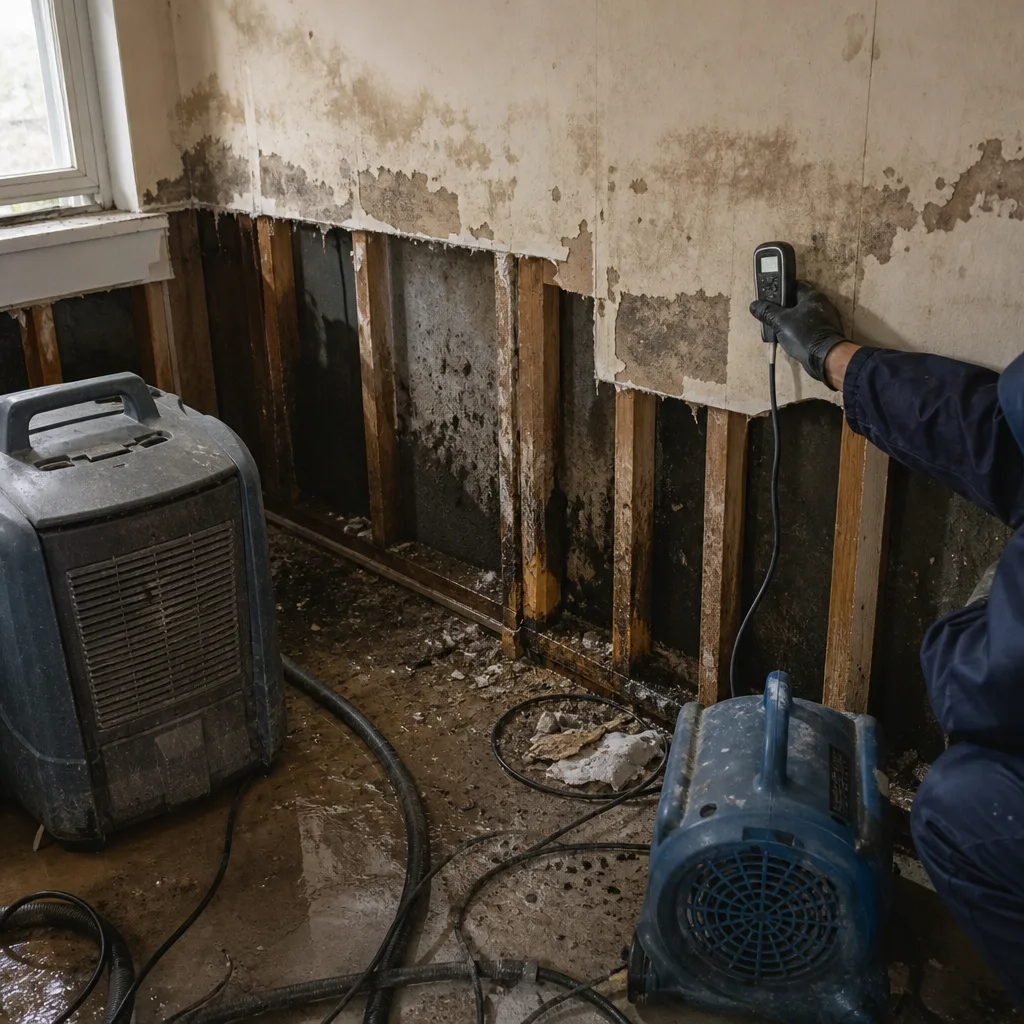 Before
 After
After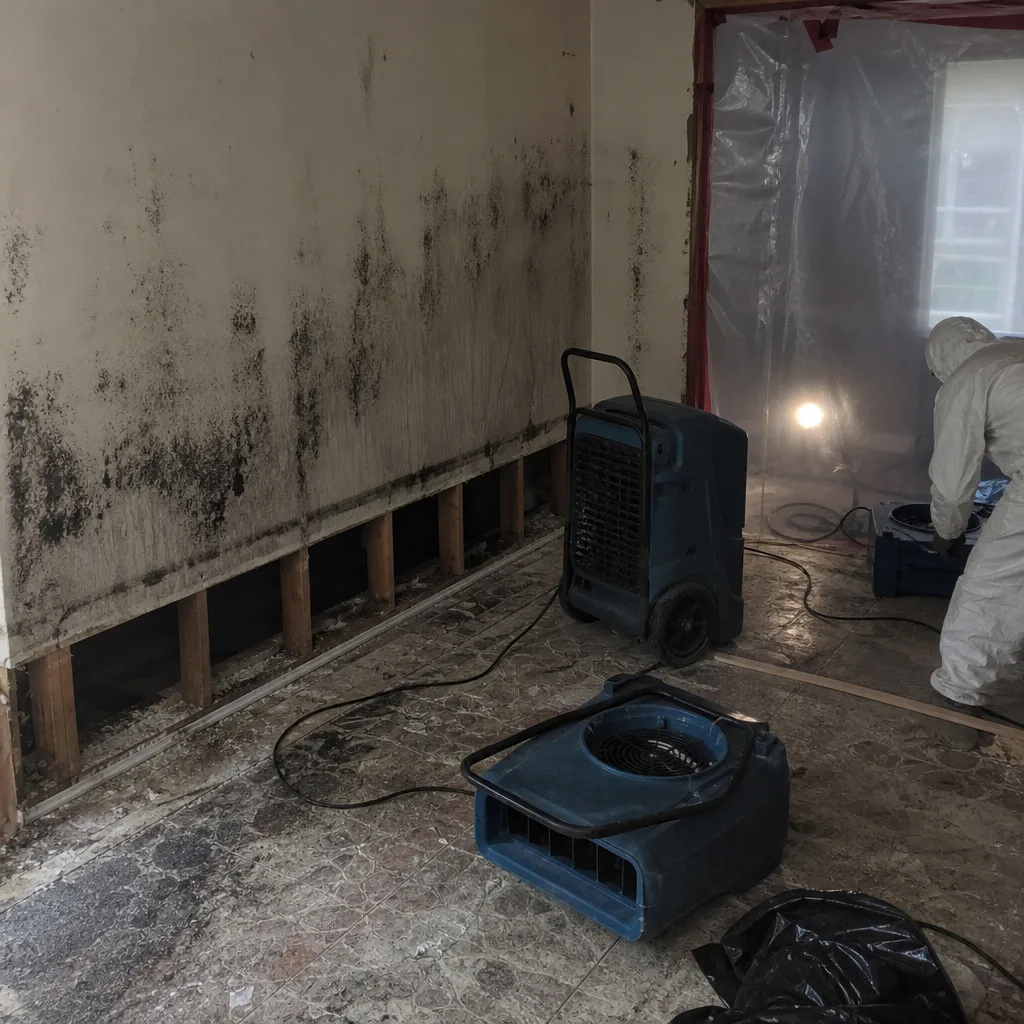 Before
 After
After